Showing posts with label cyberharassment. Show all posts

Saturday, May 12, 2012

A Possible Answer to Why CyberStalkers & Cyberharassers Do It?

EOPC are not doctors, mental health professionals, police or lawyers. This is posted merely as informational. Perhaps this is why serial stalkers and harassers do it. Many cyberpaths and internet trolls have a desperate need to control others and control what is on the net. One only need ask - Why? It is up to you to make up your own mind.


Personality Disorders in the Paranoid-Narcissistic Spectrum

by Dr. T. O'Connor, Dept of Justice Studies, NC Wesleyan College

There are ten different personality disorders, and in this lecture, the spectrum approach is followed which allows for mixed types, and it should be noted the spectrum approach is controversial and not the way most clinical psychologists are trained. The spectrum approach to classification transcends the DSM (Diagnostic Statistical Manual) method, and is essentially a heuristic approach designed for theory development, not validation.

No single set of symptoms are required for inclusion in a spectrum. Rather, the sameness or similarity of comorbidity characteristics and the underlying causal processes are looked at. Spectra can be constructed that link Axis I and Axis II disorders, psychotic disorders and personality disorders, affective disorders and sexual disorders, and so on. In most cases, the subject's personality has not disintegrated to the point where there is any one identifiable clinical syndrome. A spectrum disorder may exist in muted form or as a mirror-image of a diagnosed or undiagnosed mental illness. We are concerned in this lecture with personality types that primarily exhibit the common characteristic of aggression.


Paranoia occurs in two forms: (1) the "bad me" paranoid; and (2) the "poor me" paranoid. Paranoia affects .5 to 2.5% of the population.

The "bad me" type tends to be more rageful and sadistic than the other type. Paranoia in all its forms tends to be organized around aggression, from sadomasochistic violence to lingering hostile mood. Paranoia is an insidious disease which develops slowly as a secondary personality characteristic, fuses into a more or less dysfunctional coping style, and may or may not become the dominant pattern. Psychologists suspect that the cause of paranoia is found in the mothering experience, in particular, the breast-feeding experience. Successfully breast-fed infants develop the capacity to feel supported and a tolerance for frustration. Unsuccessfully breast-fed infants (those who viewed the experience as "bad" in some way) develop a distinct inability to experience self-satisfaction, tolerance, and positive relationships. Internalization of the bad experience leads to the initiation of provocative and confirmatory interactions with others, mostly through splitting (seeing things as black-white, good-bad, weak-strong) and projection (accusing others of having the disowned aspects of your self).

A full-blown "bad me" paranoid perceives threats in everything other people do, often exploding in manic, counterphobic episodes. A full-blown "poor me" type views the world as basically unfair and persecutory, countering their anticipation of discomfort with either antisocial behavior or grandiosity.


Delusions: One the cardinal symptoms of paranoia and other disorders, most notably schizophrenia. Delusions are faulty interpretation of reality that cannot be shaken despite clear evidence to the contrary.

Delusions can be classified as:

  • Bizarre -- belief that others can hear your thoughts, others are inserting thoughts, or your thoughts, feelings, and impulses are controlled by an external force
  • Referential -- belief that certain gestures, comments, song lyrics, or passages in printed material are specifically intended for you or reference you in some way
  • Grandiose -- belief that you are an extremely important person, an invaluable member of society, and possess or make some special unrecognized talent or contribution
  • Persecution -- belief that others are out to get you, are plotting against you, foiling your every move, or making you feel guilty or ashamed
  • Bodily -- belief in some kind of undiagnosed deteriorative medical condition such as dissolving of spinal cord, rotting or deterioration of skin, organs, or brain
  • Religious -- belief that you are an important religious figure, in contact with deities, or serving some special theological purpose in the world.

Narcissism is a somewhat less severe form of psychopathy.

It manifests aggressive, paranoid, and borderline characteristics, but more commonly appears in the form of envy, greed, power lust, an extensively rationalized sense of entitlement, and a pathological grandiose self. Unlike psychopaths, narcissists can experience loyalty and guilt; but like psychopaths, narcissists lack empathy or caring for others, viewing people as "playthings" to be used.

Female narcissists tend to be the kind that "sleep" their way to the top; male narcissists tend to get ahead by becoming involved in massive power struggles. Psychologists suspect that the cause of narcissism is severe mental or physical pain in childhood at the hands of a powerful, idealized mother-father figure. Inconsistent parental attitudes on aggression and self-assertion as well as childhood experiences of being valued for specific, precocious talents seem to be the prime determinants. They never learned who to identify with -- the aggressor or victim, and they developed a pragmatic philosophy of siding with winners, regardless of who was in the right or wrong. In fact, they believe that the "good" is usually changeable and fickle while "bad" is stable and predictable. They live life by idealizing those who satisfy their narcissistic needs and systematically devaluing and denigrating those who do not. Underneath their superficial charm, they feel they have a right to control, manipulate, exploit, and be cruel to others.


There's not much research proving narcissists are more prone to violence than any other group, and no one has a clue as to how widespread this particular personality disorder is - estimates range between 3 and 15% of the population, with 5-7% being a fair estimate. Being a narcissist is close to being an alcoholic but MUCH more so. Alcoholism is impulsive behavior. Narcissists have this plus hundreds of other problems. Narcissists frequently have uncontrollable behaviors, like rage which is an outcome of their grandiosity. Narcissists can rarely be cured, but side effects, associated disorders (such as OCD), pathological lying, and the paranoiac dimensions CAN be modified.


ANGER, WORRY, RAGE

Most Personality Disordered people are prone to anger. Their bottled-up anger is always sudden, raging, frightening and without apparent provocation by an outside agent. It would seem that people suffering from personality disorders are in a CONSTANT state of anger, which is effectively suppressed most of the time. It manifests itself only when the person's defenses are down, incapacitated, or adversely affected by circumstances, inner or external. In a nutshell, such people were usually unable to express anger at "forbidden" targets in their early, formative years (parents, in most cases). The anger, however, was a justified reaction to very real abuse or mistreatment. The patient was, therefore, left to nurture a sense of profound injustice and frustrated rage. Healthy people experience anger, but as a transitory state.

  • Personality disordered anger is always acute and permanently present.
  • Healthy anger has an external inducing agent (a reason), and is directed at another (coherence).
  • Pathological anger is neither coherent, nor externally induced. It emanates from the inside and is diffuse, directed at the "world" or "injustice" in general.

The Personality Disordered are afraid to show that they are angry to meaningful others because they are afraid to lose them. The Borderline Personality Disordered is terrified of being abandoned, the Narcissist needs his Narcissistic supply sources, the Paranoid - his persecutors and so on. These people prefer to direct their anger at people who are meaningless to them, people whose withdrawal will not constitute a threat to their precariously balanced personality. They will yell at a waitress, shout at a taxi driver, or explode at an underling. Alternatively, they will sulk, feel bored, drink or do drugs ? all forms of self-directed aggression. From time to time, no longer able to pretend and to suppress, they will have it out with the real source of their anger. They will rage and, generally, behave like lunatics. They will shout incoherently, make absurd accusations, distort facts, pronounceallegations and suspicions. These episodes will be followed by periods of sentimental sweetness and excessive flattering and submissiveness towards the victim of the latest rage attack. Motivated by the mortal fear of being abandoned or ignored, the Personality Disordered will debase and demean himself to the point of provoking repulsion in the beholder. These pendulum-like emotional swings are common. Anger is the reaction to injustice (perceived injustice, it does not have to be real), to disagreements, to inconvenience.

Hostile expressions by the Personality Disordered are not constructive - they are destructive because they are diffuse, excessive, and unclear. They do not lash out at people in order to restore self-esteem, prestige, or a sense of power and control, but because they cannot help it and are in a self destructive and self-loathing mode. Their angry episodes contain few signals or warning signs. Their anger is primitive, maladaptive, and pent up.

The Personality Disordered also suffer from a cognitive deficit. They are unable to conceptualize, to design effective strategies and to execute them. They dedicate all their attention to the immediate and ignore the future consequences of their actions. In other words, their attention and information processing faculties are distorted, skewed in favor of the here and now, biased on both the intake and the output. Time is dilated for them - the present feels more protracted, "longer" than any future. Immediate facts and actions are judged more relevant and weighted more heavily than any remote aversive conditions. Anger impairs cognition. The angry person is a worried person.

The Personality Disordered is also excessively preoccupied with himself (solipsism). Worry and anger are the cornerstones of anxiety. The striking similarity between anger and personality disorders is the deterioration of the faculty of empathy. Angry people cannot empathize. Actually, "counter-empathy" develops. Recent provocative acts by others are judged to be more serious ? just by "virtue" of their chronological position. This is what distinguishes rage from anger.

Rage attacks in personality disorders are always incommensurate with the magnitude of the source. Anger is usually a reaction to an ACCUMULATION of aversive experiences, all enhancing each other in vicious feedback loops, many of them not directly related to the cause of the specific anger. The angry person may be reacting to stress, agitation, disturbance, drugs, violence or aggression witnessed by him, to social or to national conflict, to elation and even to sexual excitation.


EVIL, DESTRUCTIVENESS, ADDICTION

The psychopathic argument with reality that is present in all personality disorders is a narcissistic pleasure of lying and deception. They don't lie to everybody, only those people (good-bad, strong-weak, females, strangers, authority figures) that they have differentiated as worthwhile or not. Each dichotomous split and pattern of lying is indicative of a different personality disorder, but the most common pattern is a desire to dupe or deceive those perceived as "good" people, to rob them of their "goodness", as it were, and to further deprive them of any moral right to feel victimized. Identification is always with the aggressor or with evil -- as powerful, bad, and ideal. In many cases, there are fantasies or interests about animal predators or archetypal evil demigods.

An inverted conscience means that the superego idealizes evil. Things that would normally produce guilt, insecurity, and anticipation of punishment in ordinary people produce feelings of self-esteem, security, and self-cohesion in the personality disordered. They only experience a sense of being true to their real self when they are persecuting others, inducing pain and suffering, and further experiencing feedback about how much malicious destruction they have done. Full-blown psychopaths have the highest degree of inverted conscience, and sadists have the highest degree of need for feedback.

However, it's extremely rare to find a perfectly intact inverted conscience. Most of the personality disordered live with fragments of a normal superego. These guilt fragments are expressed in occasional self-defeating behaviors. Their self-destructiveness will probably never take the form of suicide or any devaluing of the importance of winning through aggression, but they may change their split between strong-weak attributions, present themselves for therapy, or seek out religious mysticism. More frequently, however, when confronted with a self-crisis, they will adopt new names (aliases) for themselves, thus making themselves their own parents.

Drugs and alcohol are used to repair their personalities especially when there is a problematic representation of self to others. The personality disordered are commonly addicted persons because the "cycle of addiction" perpetuates the extreme self-state needed to shore up their self-cohesion while at the same time undermining any adaptive integration of self with experience. All addicted persons experience cycles of self-state extremes. One of the extreme self-states will be the dominant organizer of experience. An alcohol-induced self-state, for example, will assist in lowering inhibitions and facilitating aggressive tendencies. A psychoactive drug-induced self-state may assist in fostering paranoid delusions. The most serious and sadistic crimes committed by such individuals will be when they are at the peak of their dominant extreme self-state. This means that they commit crime while intoxicated or shortly thereafter. Since they only "need" to drink or drug when there is a need for personality repair, it's unclear if they have a substance addition, a violence addiction, or a state of mind addiction.


PERSONALITY DISORDERS IN THIS SPECTRUM

Aggressive Style:

PARANOID:
Provocative, pre-emptive attack

Superego Development: Defective
Conscience: Retributive, vindicates self
Destructiveness: Vengeful

NARCISSISTIC:
Denigrating, demeaning to others

Superego: Immature
Conscience: Normal with Delusions
Destructiveness: Interpersonal Exploitation

ANTISOCIAL:
Rebellious, contemptible

Superego: Deviant
Conscience: Distorted
Destructiveness: Interpersonal and Expressive crime

PSYCHOPATHIC: Malicious, Predatory
Superego: Perverse
Conscience: Inverted
Destructiveness: Strategic Conquest and Domination

SADISTIC:
Sadism

Superego: Defective and Perverse
Conscience: Inverted
Superego Development: Defective and Perverse
Destructiveness: Proloinged Anguish and Suffering


THE LEARNING THEORY OF SERIAL MURDER

As an alternative to the idea that serial killers are driven by "fantasy", at least one criminologist (Hale) has proposed that they are driven by humiliation or embarrassment. They perceive the world as full of "attacks" or "challenges" that cannot go unanswered. This acute need to reassert power is drawn from early childhood experiences where the offender felt powerless to control events. This need, combined with an arrested social development which includes problems at demonstrating mastery and at social comparison, results in the use of a victim as an audience to "set things right." In this view, serial killers are seeking approval from their victims.

Like all people, even the personality disordered are motivated to seek the approval of others. For various reasons, however, they experience feelings of frustration at finding ways to conceptualize how they would go about obtaining this approval from others. They actually anticipate failure without even trying. This is because they perceive the original person who humiliated them as superior or more "powerful" than they are. They then seek out vulnerable and less threatening persons as victims, who become scapegoats for the person who initially thwarted their needs for approval.

The diagnosis of "malignant narcissism" may be more apt for serial killers than "antisocial personality disorder" because it better exemplifies the connotation of evil that hangs over this domain of personality. A malignant narcissist is someone who exhibits antisocial personality traits combined with unrestrained aggression, a more pathological than deviant conscience, a strong need for power and recognition, distrust of others, and certain elements of sadism. Kernberg says that malignant narcissism develops as a defense against feeling of inferiority and rejection.

All criminals tend to have problems understanding social norms. They are more self pre-occupied than concerned with obeying the law. Serial killers, like many criminals, are driven more by the expression of their internal needs than a rejection of external forces. To maintain this schedule of "conditioning one's conscience", two things are necessary: alienation and isolation. Fromm said that alienation can be handled by ritualized behavior. Isolation simply limits exposure to societal sources of social control.


PRINTED RESOURCES:

Aronson, T. (1989) "Paranoia and Narcissism" Psychiatric Review 76(3):329-51.
Brown, N. (1998) The Destructive Narcissistic Pattern. Westport, Ct: Praeger.
Ferreira, C. (2000) "Serial Killers - Victims of Compulsion or Masters of Control?" Ch. 15 in D. Fishbein (Ed.) The Science, Treatment, and Prevention of Antisocial Behaviors. Kingston: Civic Res. Inst.
Fromm, E. (1973) The Anatomy of Human Destructiveness. NY: Holt, Rinehart & Winston.
Hale, R. (1993) "The Application of Learning Theory to Serial Murder: Or You Too Can Become a Serial Killer" American J. of Criminal Justice 17:37-45.
Hale, R. (1994) "The Role of Humiliation and Embarrassment in Serial Murder" Psychology: A Journal of Human Behavior 31:17-23. Horowitz, M. (1994) "Cyclical Patterns of States of Mind" Amer. J. Psychiatry 151(12):1767-70.
Kernberg, O. (1992) Severe Personality Disorders. New Haven: Yale U. Pres.
Kernberg, O. (1993) Aggression in Personality Disorders and Perversions. New Haven: Yale U. Press.
Kirmayer, L. (1983) "Paranoia and Pronoia" Social Problems 32(2):170-79.
Lowen, A. (1997) Narcissism: Denial of the True Self. NY: Touchstone Books.
Millon, T. & R. Davis (1995) Disorders of Personality: DSM-IV and Beyond. NY: Wiley & Sons.
Richards, H. (1998) "Evil Intent: Violence and Disorders of the Will" Pp. 69-94 in T. Millon et al. (Eds.) Psychopathy: Antisocial, Criminal, and Violent Behavior. NY: Guilford Press.
Ronningstam, E. (1998) Disorders of Narcissism. Washington DC: Amer. Psychiatric Press.

original article here

Wednesday, March 14, 2012

Why Victims Need to Tell & Keep Telling

On behalf of all survivors, let me just say this: if we could "just get over it", we would. If we could snap our fingers and instantly make ourselves whole and healthy once again, we would do it. If we could wake up one morning, and find ourselves completely healed of our abuse, and completely free of the harmful effects the abuse had wrought on our lives, we'd do it. If there was a magic pill to take, or a certain food we could eat, or a spell we could cast, or a prayer we could say which would make it all go away instantly, I can't imagine any survivor who wouldn't at least try it once.

The fact is, it's too exhausting to live with the consequences of being abused. Depression, eating disorders, violence, generational abuse, panic attacks, and so on are all potential results of being abused; and why would anyone want to be plagued by such things? Furthermore, the toll abuse takes in terms of survivors' self-esteem is incredibly debilitating. Oftentimes, even survivors who are relatively together are haunted by the nagging belief that they aren't worthwhile human beings.

And the supreme irony of it all is that, by and large, the abusers and perpetrators themselves NEVER take responsibility for cleaning up the mess they've left behind in their victims' lives. It is the abusers who rip their victims apart, but the victims who must put themselves back together.


The backlash against survivors who dare to talk about their experiences is incredible. From well-meaning relatives or friends who hope to lessen the pain somehow by telling us, "It can't have been that bad," to death threats and stalking from abusers we've confronted, to organizations operating on a large-scale to debunk reports of abuse (such as the False Memory Syndrome Foundation), survivors are beset on all sides with walls of disbelief.

We are accused of making it up, of being crazy, of being "oversensitive", scorned, jealous, ungrateful, just out for attention, or any of a thousand demeaning labels which not only insult our individual persons, but also give no respect to the horrors we've survived, or the strength we have shown in doing so.


It is my personal opinion that people just don't want to admit abuse exists. Sometimes, this is understandable. Sometimes, a person might have great faith in the goodness of humanity, and can't even conceive of abuse as happening (or else, can't conceive of it happening except "over there", or "somewhere else").

Or perhaps they don't want to imagine that abuse might have happened to someone they care about, and so they minimize it. Maybe, they even believe they are helping to relieve a survivor's pain, by suggesting that the survivor focus on something else.


Other people have a more vested interest in letting abuse happen. ... The only acceptable reason for not stopping abuse is if you really don't know that it's happening -- and this is extremely rare.)

People who buy into an abusive system -- say, overly macho or aggressive men, or very submissive women -- might deny that abuse happens as well. A good portion of college men apparently believe that there is no such thing as rape, and that it's okay to have sex with a woman if she's drunk or unconscious. (I say, if the only way you can get laid is with a woman who's out cold, you're probably the most pathetic a**hole that ever lived -- and a criminal to boot.)

Yet another group has a direct investment in whether or not abuse is revealed: abusers themselves.

For one reason or another, abusers want to get away with it. Why? I don't know. I've never been inside an abuser's head, I've only been on the receiving end of their abuse. I don't know what makes abusers tick -- and in some ways, I hope I never find out.

The bottom line is, this isn't a very survivor-friendly world. Yes, resources are out there. Yes, people know more about abuse and recovery than they ever did before. Yes, more strides are made daily, in healing and in research. Yes, we keep talking. But it isn't easy. All of the above makes our lives very difficult.

Add to this the reports of abuse which actually do turn out to be false, and it just adds one more wall -- if one "victim" cries wolf, it makes those of us with true stories to tell that much more likely not to be believed.


But talk we do, and talk we will. With our friends, our families, in books, in journals, through artwork, with therapists, online, on web pages and blogs... on and on and on.

We have to.

For those of us who have suffered abuse at the hands of others, the only way out is by revealing what happened -- bringing it out into the light, naming it for what it is, looking at it good and hard, assessing the damage done to our selves and our lives, and then assimilating the damage and moving on. No, there's no overnight cure. No, we can't just "snap out of it". DUH!

We have to talk, because if we don't, abuse will never come to light, for anyone. It will continue breeding in the silence and shame, on and on, for generations to come, causing the same debilitation and hatred and confusion for future generations that it has to us.

We have to talk, because we can't let abusers get away with it anymore.

The toll they take on all of humanity is simply unacceptable.

original article here

Tuesday, January 31, 2012

Charged with Online Harassment


(U.S.A.) Bridgeport man once again faces charges for stalking a woman in Fairfield, and this time police said he used a fake name and Facebook and Twitter accounts, police said.

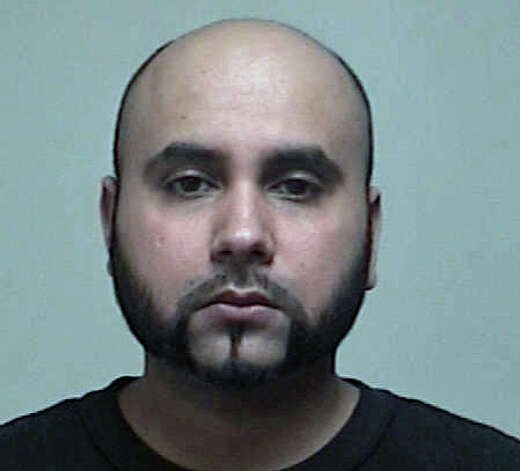
Dawer Gilani, 32, of Atlantic Street, was taken into custody by Fairfield police Monday at his home and charged with 10 counts of violation of a protective order and violation of his conditions of release. He was held on a $250,000 bond and was scheduled to appear Tuesday in Bridgeport Superior Court.

Gilani was stalking the same woman he was charged with harassing previously, police said. She contacted police on Jan. 12 to report that Gilani was using the name Ali Umar and sending her friend requests on Facebook. While he apparently used a different name, he did not use a different photograph and the woman was able to identify him as Gilani. He also set up a Twitter account using that name, but police said the only person he was following on Twitter was the victim.

Police seized evidence from Gilani's car and home during the arrest.

Sgt. Suzanne Lussier said Gilani began stalking the victim at her place of employment last January when he was initially warned to stay away. The next month, he went to her office, and asked to speak with her, telling her co-workers that he knew her from the Planet Fitness gym in Trumbull. He was told to leave. In March, the victim found a note on her car, telling her not to call police. Afraid for her safety, she reported the incident to police.

In April, Gilani came to police headquarters asking if there was a legal way to contact the woman. Again, he was warned to refrain from contacting her in any way, and the woman was advised by police to obtain a restraining order.

Police spotted Gilani in May circling the parking lot of the Fairfield building where the woman works, and police said he admitted he was trying to find her car. Gilani was charged with stalking and criminal trespass in May and again in August. In June, Trumbull police also charged Gilani for repeatedly driving by the victim's home, while Bridgeport police have reportedly investigated five documented incidents involving Gilani stalking another woman in that city, police said.

According to court records, Gilani pleaded not guilty in August to threatening, harassment and disorderly conduct charges stemming from the Fairfield arrest and the case is awaiting disposition. He also pleaded not guilty to the Trumbull charges of stalking, breach of peace and violating conditions of release, and court records indicate that case is awaiting disposition. A third court case is blocked from the public with the notation that it is "statutorily sealed."


Thursday, January 12, 2012

FREE SPEECH: FROM LEGAL TO LETHAL

by Lori Andrews

Recently, Judge Roger Titus of Maryland declared unconstitutional a federal law that made it a crime to use the internet "with the intent to harass [or] cause substantial emotional distress to a person in another state." In the wake of that decision, legislatures and courts across the country will need to rethink existing statutes on cyberharassment.

In the Maryland case, William Cassidy had been charged with cyberstalking Alyce Zeoli, a former colleague and a Buddhist religious leader, based on his tweets, such as, "Do the world a favor and go kill yourself. P.S. Have a nice day." Zeoli asserted that the tweets made her so fear for her safety that she had not left her house for a year and a half, except to see her psychiatrist. But the judge dismissed the case. His reasoning will animate discussions in legislatures about how to amend state and federal laws.

Judge Titus indicated that "threats of harm" are punishable, but not communications "intending" emotional distress. He also considered it relevant that the medium used (a tweet) was communicated to the public at large rather than just the victim. The target of the harassment could just choose not to follow the tweets. "This," said the judge, "is in sharp contrast to a telephone call, letter or e-mail specifically addressed to and directed at another person, and that difference ... is fundamental to the First Amendment analysis in this case." Judge Titus also seemed to think that it was unreasonable for Zeoli to have such a dramatic reaction; he said that Cassidy's tweets were not a "true threat."

Words are powerful. They can move listeners or readers to action, sometimes even to harm themselves or someone else. But generally, our society doesn't punish the speaker or writer. Think about Ozzy Osbourne. Thirty years ago, he recorded the song Suicide Solution. The song states that "Suicide is the only way out," and contains the barely-recognizable lyrics, sung at a faster speed, "Get the gun and try it; Shoot, shoot, shoot."

When a 19 year old shot himself in the head with a .22 caliber handgun after spending five hours listening to Ozzy's music, his grieving parents sued Ozzy and the record distributor. The California Appellate Court rejected their claims (pdf), noting that speech does not lose its First Amendment protection merely because it "may evoke a mood of depression." The court said the lyrics failed to "order or command anyone to concrete action at any specific time."

But courts have held differently when the speech is directly addressed to a particular person. In a case currently on appeal in Minnesota, William Melchert-Dinkel was charged with pressuring two people over the internet to commit suicide. He posed as a young female nurse who pretended to enter into a suicide pact with his victims. The judge in the Minnesota case pointed out that Melchert-Dinkel's "encouragement and advice imminently incited the suicide of Nadia Kajouji and was likely to have that effect." The judge in the case labeled the instant messages as "lethal advocacy" and held that Melchert-Dinkel's words were "analogous to the category of unprotected speech known as 'fighting words' and 'imminent incitement of lawlessness.'" The judge distinguished messages sent to the public at the large, saying that Melchert-Dinkel had the right to take his pro-suicide message to the public--over the internet, on television, and so forth--but did not have the right to address that message to a single, vulnerable individual. Melchert-Dinkel's attorney is appealing the case, based on the First Amendment.

But how direct does a threat have to be? What if Melchert-Dinkel had just sent Nadia an mp3 file with Ozzy’s Suicide Solution? Courts are already weighing whether people's "likes" on a social network can be used as evidence against them. In a Wisconsin case, a judge admitted into evidence a litigant's MySpace reference to a short story in which a judge was harmed. In contrast, a Mississippi court refused to use a dad's MySpace post of Ronald McDonald being shot in the face to prove that the mom should get custody of the kids.

The "intent" standard is also problematic. As Judge Titus suggested, the standard is too broad, covering speech that is constitutionally protected. But the "intent" standard is also, in some cases, too narrow. It might allow someone to evade legitimate prosecution by claiming they didn't intend harm, they just intended to be funny.

That strategy worked for 40-year-old Elizabeth Thrasher, whose victim was her ex-husband’s new girlfriend’s daughter. Thrasher posted photos, the phone number, and the email address of the 17-year-old girl in the "Casual Encounters" section of Craigslist, in which people expressed their interest in casual sex. As a result of the "Casual Encounters" posting, the 17-year-old girl was swamped with sexually explicit cell phone calls, emails, and text messages that included nude pictures and solicitations for sex. One man even came to the Sonic Restaurant where she worked after failing to reach her on her phone, leading her to eventually quit her job out of fear. She testified that the publication of the information made her feel like she "was set up to get killed and raped by somebody." Thrasher’s attorney argued that photos of the girl and her work location were already available on the girl's MySpace profile. He said the postings were "tantamount to a practical joke"--and Thrasher was acquitted.

The issue of targeting a victim versus the public at large is also a question to be considered. Judge Titus suggests that, to be criminally actionable, tweets and posts need to be sent directly to the victim. But because of the nature of digital communications, Judge Titus' distinction between public tweets and direct communications with the victim may not hold up in future cases. Much of the cyberharassment of women does not involve a direct threat from one person to another. In a Connecticut case, a man posted a YouTube rap video of himself waving a gun while threatening to shoot his baby's mom and "put her face on the dirt until she can't breathe no more." Even though the man was in North Carolina at the time and the woman resided in Connecticut, the court issued a restraining order against him.

Under Judge Titus' standard, such a video might not have been a cause for concern because the woman could just have turned it off. This issue of targeting a private person versus the public at large will be key in cases where the person posts information (such as a Google map to a woman's house with a claim she wants men to act out rape fantasies) and the poster himself does not intend to do violence.

As courts and legislators deal with cyberharassment, they'll be determining what the limits are to punishing people for tweets and posts that threaten violence or cause emotional harm. They'll also have to determine whether the rule that the communication must be sent directly to the victim makes any sense in the age of Twitter, Facebook, and YouTube, where public posts--especially those that urge someone else to harm the victim--might be even more deadly than private ones.

Lori Andrews is the author of the upcoming I Know Who You Are and I Saw What You Did: Social Networks and the Death of Privacy

Tuesday, January 10, 2012

Over 400 Online Bullying Incidents in Wales in 2011


(U.K.) Almost 400 incidents of cyber harassment and bullying were investigated by police in Wales last year, we can reveal.

Victims of abusive, threatening or harassing messages sent via social networks included teenagers as young as 14.

The problem has increasingly hit the headlines in recent months with celebrity victims Katherine Jenkins and former Miss Wales Imogen Thomas complaining publicly about being subjected to vitriolic online attacks.

Away from such high profile cases, in the South Wales Police force area alone 331 harassment-related incidents classed as “e-crime” were investigated, but resulted in just three arrests.

A Freedom of Information request identified 46 cyber crimes in the Dyfed-Powys Police area, resulting in 12 arrests. Offences included 10 hate crimes, one kidnapping and one threat to kill. Eight victims were under the age of 20. In North Wales, where 18 crimes on social networks were recorded, police investigated one offender for harassment while using a false identity.

Two cases were referred to the High Tech Crime Unit in Gwent, involving harassment messages, and e-mails sent to trustees of an organisation alleging homophobic harassment and bullying. However no further action was taken.

The Child Exploitation and Online Protection (Ceop) Centre is currently running a programme called Thinkuknow to educate children and young people about the dangers of “trolling” they face online.

A spokesman said: “Trolling is a description given to someone’s online actions that are deliberately inflammatory or abusive. It ranges from posting a nasty comment on a social networking profile, or a football forum to extreme and persistent abuse.

“It could include harassment, bullying or anything that causes distress to another. The effects can be devastating. Too few people realise that in acting this way online you can quickly break the law. People may think they can remain anonymous when they are online, that they can say and do things they wouldn’t dream of doing in real life without consequences.”

A spokesman for eCrime Wales said: “The e-Crime Partnership, which includes the four Welsh police forces, works to raise awareness of e-crimes of all kinds. The fact that these incidents are now being reported by the public reflects the fact that people in Wales are becoming more aware of the issue generally and of the importance of passing details of such attacks to the police.”

Jonathan Bishop, a South Wales-based internet expert who recently ran a Trolling Academy tutorial, said that as the numbers of arrests were low, fixed penalties and Asbos should be used against cyberbullies for less severe offences. It would be more appropriate then if local authorities, particularly where vulnerable persons are affected, used their powers under New Labour’s anti-social behaviour legislation to issue fixed-penalties to those who harass others, he said. “Local authorities also have the powers to apply for Asbos against persons, which could tell the cyberbullies that they can go to jail for up to two years if they continue their abuse.”

Criminal cases involving the malicious use of false identities on social networks are becoming increasingly common.

In August James Edward Dunn, 28, from Middlesbrough, was jailed for seven years for raping a 15-year-old girl he had lured into meeting by lying about his age on Facebook.

At the time the investigating officer, Detective Constable Jolene Morrison, had urged teenagers who use Facebook to “only speak to people that they know” and to be aware that the person they think they are talking to may not actually be that person.

In September Sean Duffy, 25, from Reading, was jailed for 18 weeks for taunting the families of four dead teenagers on online tribute sites.

And in November, police in Mid Wales vowed to crack down on “trolls” after a 14-year-old sex abuse victim was subjected to an online smear campaign after her attackers were brought to justice.

Mr Bishop, a town councillor for Treforest, said the use of false identities – by “Snerts” who post messages to harm others, and “E-Vengers” who are driven to harm others they feel have wronged them – is a serious problem.

Wednesday, December 21, 2011

Twitter Stalking is Protected Free Speech


by Andrew Couts

(San Francisco, U.S.A.) Saying mean, terrible, even violent things about someone on Twitter or blogs is free speech protected by the First Amendment, a judge has ruled.

A San Francisco judge has declared that cyberstalking on Twitter and blogs is constitutionally-protected free speech, reports The New York Times. The ruling is a victory for the First Amendment. But like all things worth fighting for, it comes at a price.

Here’s what happened: A Buddhist religious leader in Maryland named Alyce Zeoli became friends with a man named William Lawrence Cassidy. At some point, the two had a falling out. Cassidy took the mature route, and began posting thousands of messages on blogs and Twitter, often using pseudonyms, that aggressively disparaged Zeoli. Some of them even called for her death.

Understandably distraught, Zeoli then worked with the FBI to have Cassidy arrested, which he was, based on interstate stalking laws. Cassidy, the government argued, had caused Zeoli “substantial emotional distress.”

This, however, was not enough to convince Judge Roger W. Titus, who declared that Cassidy’s actions, while distasteful, were not enough to set a precedent that could cause serious harm to the entire foundations of speech on the Internet.

“[W]hile Mr. Cassidy’s speech may have inflicted substantial emotional distress, the government’s indictment here is directed squarely at protected speech: anonymous, uncomfortable Internet speech addressing religious matters,” wrote Judge Titus, in his official order.

Titus ruled that, because no one was forced to read Cassidy’s posts and tweets — as opposed to a “telephone call, letter or email specifically addressed to and directed at another person” — they are considered free speech, not harassment, just as personal bulletin boards of the colonial era fell under the protection of the First Amendment, which “protects speech even when the subject or the manner of expression is uncomfortable and challenges conventional religious beliefs, political attitudes or standards of good taste.”

One of Zeoli’s lawyers, Shanlon Wu, told the Times that Zeoli was “appalled and frightened by the judge’s ruling.” It is not yet clear whether there will be an appeal to the ruling.

Friday, December 16, 2011

Police Dispatcher Charged After Harassing Online


(U.S.A.) A South Texas police dispatcher is in trouble with the law after she posted photos of her husband and a female police officer on her Facebook page.

Brownsville dispatcher Laura De Leon is free on her own recognizance after she was charged with single counts of online harassment and phone harassment. Both are misdemeanors. She's also on administrative leave from her job with the Brownsville Police Department.

De Leon told The Brownsville Herald that she posted the suggestive photos and text messages exchanged between the woman and her husband, both of whom are Brownsville police officers.

She also admitted to calling the other woman and leaving a voice mail message on her phone. She said she did this because she was upset and later took down her Facebook postings.

Tuesday, December 6, 2011

Amanda Craig Tells Her Horrifying Story of Being Cyberharassed


By Amanda Craig

(U.K.) What is it that makes people want to send vitriolic abuse, including death threats, to a total stranger?

I can’t begin to imagine. But this year, thanks to Twitter and Facebook, I do know what it is like to be on the receiving end of such embittered hatefulness.

Why? Because I’d dared to write a piece in this newspaper about my teenage years spent at Bedales, the progressive public school that was embroiled in a scandal earlier this year concerning shoplifting and under-age sex.

As a pupil at the school in the 1970s, I had experienced a level of bullying and abuse that I still find disturbing to think about to this day and which inspired my second novel, written 20 years ago, A Private Place.

Yet when I set down my painful memories of my formative years on paper, I never imagined I’d be setting myself up as a sitting target for a new breed of modern-day bullies, who choose not the school playground, but the internet to target their victims.

‘Cyberbullying’ isn’t confined to children — it is a contemporary menace in which people can be targeted anywhere, at any time. When my email inbox began to fill up with awful messages, my first reaction was one of exasperation, quickly followed by cold contempt.

I was totally unprepared for the slew of virulent messages that, for the next month, pinged into my inbox via both my Twitter account and my public Facebook page. Many of these messages are unpublishable in a national newspaper, but they included threats to my personal safety, disgusting sexual abuse, venomous comments about my looks and personality, a flurry of one-star Amazon reviews of my novels — and several attempts to hack into my Wikipedia entry.

Astonishingly, those behind them were girls and boys of between 15 and 21 years old, many of whom declared themselves to be current or former pupils of Bedales. They defended the school by calling me bitter, greedy, bitchy and, what’s more, claimed that I ‘deserved to be bullied’. Then they said that the school was wonderful, and that bullying didn’t exist there, and that ‘every single one of (the abusive comments that had been posted about me) was understandable and acceptable’.

The poisonous mob mentality these messages displayed actually did far more to show any current or prospective parent the ugly side of a ‘liberal’ education than what I had written. I was told that ‘we know where you live, so watch out’, ‘your [sic] dead, bitch’, ‘die, you ugly c***’ and so on.

‘You are insulting an establishment you show no understanding of, in a way in which you can only expect a [sic] outraged reaction. You have not only insulted our way of life, our home but us as individuals. I feel personally attacked,’ wrote one boy.

A couple of current pupils were moved to express sympathy and to assure me that things had changed, but these, like the nicer kind of Bedalian student of my own time, seemed far and few between.

One posted a more moderate, thoughtful comment about my article — and his peers turned on him: ‘Stop s***ing her d**k Toby, and stick up for the f*****g school. Your [sic]

The abuse was so remarkable that two national newspapers picked it up, and one even wrote a leader page column. Yet when the Head of Bedales, Keith Budge, was approached for comment, his response, as quoted in the Daily Telegraph, was to say his pupils were simply defending their school.

The Old Bedalian magazine, edited by a former member of staff, decided to publish a sneering piece, which included a photograph of me printed upside-down and — a lovely touch — an encomium of the school’s creativity by Kirstie Allsopp.

Nobody in authority has attempted to contact me to apologise, and no pupil, as far as I know, has been reprimanded. Now, I don’t take the ravings of over-excited teenagers seriously. But neither do I think anyone should be allowed to get away with this kind of behaviour — least of all the privileged pupils of a £30,000-a-year school.

For such mindless venom to come from privileged children living in conditions which the majority can only dream of, and attending an institution that prides itself on its liberal outlook would be especially offensive.

Every contemporary school is aware of the life-long emotional and psychological damage that bullying can cause, and the responsible ones, both in the state and private sectors, have strong protocols about dealing with such issues, especially online.

Cyberbullying is worse and more cowardly than playground bullying. Even as an adult, I found the abuse deeply offensive. It was extraordinary that I was being addressed as if I were still the vulnerable, innocent 12-year-old I had been all those years ago. What I had described was so painful that I thought nobody in their right mind could feel anything but shame and compassion — and, more importantly, concern about whether the ills I described were still happening.

Instead, it seemed to provoke the opposite reaction. It was extraordinary — and ludicrous. But that’s the thing about the internet. While it has transformed the way people can communicate, it has also allowed some to say the most unkind things to someone they don’t know, have never met, and wouldn’t dare to confront face-to-face.
Bullies beware: Anonymous messages can be traced back to the location and computer they were sent from (posed by model)

These so-called ‘trolls’, inspired by envy, rage and spite, appear to live in a parallel universe in which they believe they can threaten, stalk, intimidate and libel anyone with impunity.

You don’t have to do something as provocative as write about your unhappy schooldays to set them off. Just being pretty, happy, or good at what you do is enough. Whole families can be affected by the fall-out, if my experience is anything to go by.

‘Why do people keep saying horrible things about you on Facebook just because you were bullied at school?’ my 15-year-old son asked me, bemused. ‘Because they’re total losers,’ replied my 18-year-old daughter. Having been forewarned by their schools about how to handle online abuse, they were far better placed to deal with it than me.

My husband was the most shocked — and angered — at the hate-filled messages I showed him. He was the one who then had sleepless nights — and who became the most worried about our physical safety. I am not easily intimidated, but I was admittedly depressed by this evidence of how little had changed about the mentality of bullies. On the flipside, however, the attempts to undermine me caused something rather wonderful to happen.

A number of distinguished authors, journalists and lawyers — many of whom had, ironically, become friends of mine through Facebook — saw what was being posted on my page and sprang into action, unasked, to defend me with both eloquence and wit.

'For the victim, an abusive Twitter message or email is no different from receiving verbal abuse'

To see the likes of Philip Hensher, Nicholas Lezard, Louisa Young, Chris Priestly and Katy Guest all pouring scorn on these abusive bloggers was rather like the scene at the end of C.S. Lewis’s Narnia novel, The Silver Chair, when the bullies who have been terrorising the children at the progressive Experiment House are punished.

Alarmed by this unexpected challenge, the trolls began, one by one, to delete their messages. Today, they are all gone — though I, and several others, took copies of them, in case they feel tempted to strike again.

People who do not have Twitter and Facebook accounts may be rather mystified by all of this. Meanwhile, those who do may wonder why I have dared to risk further online abuse by describing my experience here.

The answer is two-fold. One is that I believe bullying will never stop unless there is a concerted effort from the top to confront it, and that while any school continues to appear to condone its own smug cult that will not happen. Second, if you haven’t experienced bullying, you have no idea what a scar it leaves on the soul. Just because I learnt how to use my rage in creative, positive ways, writing novels, doesn’t mean that it’s not there.

Connecting with readers and writers through the web can be one of the greatest delights of 21st-century life, as Twitter and Facebook host a vast virtual conversation, in which people share views and exchange ideas about everything, from trivial thoughts to breaking news. But more and more bloggers and writers are complaining about the intimidating attacks made on them.

Caroline Farrow, a vicar’s wife and mother-of-three who blogs for the Catholic Voices website, recently revealed she receives at least five sexually threatening emails a day.

One of the least offensive read: ‘You’re gonna scream when you get yours. F*****g slag. Butter wouldn’t f*****g melt, and you’ll cry rape when you get what you’ve asked for. Bitch.’ That anybody can get away with writing in such a horrific manner to another human being beggars belief — but, thankfully, the law is slowly catching up.

The Police Central e-Crime Unit is responsible for investigating malicious communications. For example, a man of 60 has been charged with sending threatening Twitter messages to MP Louise Mensch.

Perhaps the threat of arrest, a criminal record and punishment will help the bullies think twice. For the victim, an abusive Twitter message or email is no different from receiving verbal abuse, or getting a poison-pen letter.

For the bully, though, there is one key difference: although they think the internet affords them anonymity, every message can be traced back to a location and a specific computer. Cyberbullies would do well to remember that before they click the send button.

Amanda Craig’s novel A Private Place (Abacus) is being re-issued as an e-book in February.

Thursday, November 24, 2011

Three Woman Plagued by Misogynistic Cyberbullies


by Jojo Moyes

(U.K.) Only the most observant would have noticed the faint shift in classical singer Katherine Jenkins’s expression as she answered a viewer’s question on the television show Something for the Weekend last Sunday; the sudden rictus quality of her smile.

But a furious statement she posted online just after the programme ended revealed a greater drama backstage. Addressed to an unnamed online “bully”, the statement read: “You’ve set up a false account in my name where u slate & destroy my character (sic). After blocking you, you still tried 2 find a way 2 get to me & this morning was 1 step too far. Sending in a question to be read on live TV… to 'make me look clueless’ is utterly pathetic,” she wrote. Jenkins, it emerged, has been the target of this cyberstalker for over a year. “I’ve tried to ignore you but after this it’s time to stand up to you.”

Yesterday, Lynne Featherstone, the Liberal Democrat Home Office minister, unveiled proposals to introduce a specific offence of stalking, potentially also covering cyberstalking. A three-month consultation will also look at the use of restraining orders and police attitudes to stalking cases. It is a complicated issue; but it is timely. For it has been a depressing week to be female and have any kind of online presence.

On Saturday, cookery writer and presenter Lorraine Pascale posted a jaw-dropping message she had just received. It ended with the phrase: “Get off the TV c**n and know your place”. (It is now in the hands of the police).

Both she and Jenkins received a groundswell of online support. But the cyberbullying of women is becoming a matter of public concern.

Two newspaper columnists went on record last week about the online sexist abuse they suffer for the apparent sin of being female and having an opinion, while American writer Sady Doyle, weary of the level of online sexist abuse she received, has begun to document it, using the twitter hashtag: #mencallmethings. In a roundup of her unsolicited messages, reproduced on various websites yesterday, she lists, alphabetically, the abusive names she has been called in lieu of actual argument. Scanning the seemingly relentless list ('bitch’ is one of the few I can repeat), the overall effect is, frankly, numbing.

One of the great joys of Twitter when it began was that it was a place where women could have an opinion, and be funny, using a public platform. Talk to many high-profile tweeters today, and you will hear stories of extraordinary abuse directed against them.

Just last week, bestselling children’s author Emma Kennedy suffered her “most depressing day” on Twitter when she took issue with someone who believed he had a right to create and enjoy the image of another female celebrity with a knife through her head. Infuriated when she blocked him on Twitter, he bombarded her with aggressive emails instead.

Kennedy believes that anyone in the public eye can expect to find themselves cyberbullied now. “Quite why this is, is baffling to me. My main beef, however, is that women are treated very differently to men. Men’s abuse is about their words or actions. For women, it’s about their appearance and sexuality.”

The urge to provoke seems to be behind much of it. You do not have to go far online to find oddballs whose sole raison d’être seems to be to get a rise out of those more successful.

But, in an age where women are increasingly judged by how they look, there seems to be increasing anger directed at those who choose to use their voice. And the downside of online access is that those who possess that anger have no filter in place to cause them to stop and think. When I interviewed a US sports writer on this topic last year, he regretted the loss of the “lick the envelope” moment of sanity that stopped many people from saying vile things.

Some women have chosen not to address such abuse head-on, fearful that it will inflame any cyberbullying. Indeed, Jennifer Perry, spokeswoman for the charity Network for Surviving Stalking, does not think Katherine Jenkins’s decision to address her stalker online would be helpful. Ms Perry, who has advised X Factor contestants who received abuse online, said: “It’s more likely to empower him that he’s got her attention. She’s now talking directly to him, which is what he wants.”

However, the reaction of Jenkins and Pascale suggests this mood may be changing. When Tory MP Louise Mensch recently received threats to her children via email, she responded publicly: “To those who sent it; get stuffed, losers … I don’t bully easily. Or, in fact, at all.” (A man was subsequently arrested in connection with the threats). Regardless of your political persuasion, it felt like an admirably punchy response.

Mensch points out that the outspoken woman has been a trope of public fascination since Dr Johnson. “But I do think it is really important for women to stand up to any perceived threat of violence, like Lorraine Pascale has done.”

Mensch says that such abusive comments are now part of her working life, as they are for many female MPs. “If I spent all my time responding to every sexist comment which referred to rape and violence, I would lose my whole day, so I take a 'don’t feed the trolls attitude’. You have to distinguish between a genuine cyberstalker and common or garden abuse.”

Featherstone’s task will be to try and make that difficult distinction. But, in the meantime, dealing with such abuse seems to have become an inevitable side effect of having any kind of profile.

Mensch is struck by the fact that many of those who commit the abuse are often “men with respectable jobs. If you confronted them, they would be deeply embarrassed. But I’d like to ask them: would your mother be happy to hear you talking to a woman like that, using gross threats of sexual violence? If you don’t like her, you know what? Don’t follow her. Don’t read her blog. And grow up.”

original article found here

Saturday, October 22, 2011

Serious Jail Time for Cyber Harassers


New Mexico is taking another look at cyberstalking with legislation that could mean serious prison time for those who use the Internet to harass someone.

Albuquerque Mayor Martin Chavez and two state lawmakers are proposing a new state law that would bump up cyberstalking to a felony and would force cyberstalkers to register as sex offenders.

APD Chief Ray Schultz said it's time to make laws tougher to stop predators in cyberspace, who have managed to operate from behind bars.

"One of those loop holes is the fact that somebody in jail can cyberstalk from jail via electronic means and there's no way for that to be successfully prosecuted," he said.

Mayor Chavez unveiled new legislation Thursday that will make it a sex crime to cyberstalk an adult--a fourth-degree felony.

"Right now, stalking an adult is a misdemeanor in New Mexico," Chavez said.

Last year, a Sandia Labs worker was sentenced to two years under federal law after using her work computer to stalk the lead sing of the rock band "Linkin Park" in 2006.

Children are already protected from being stalked electronically in New Mexico, but the mayor said that isn't enough. He wants all convicted cyberstalkers to register as sex offenders.

"I think any legislator would be hard pressed to say anyone convicted of stalking a child online ought to be able to proceed in anonymity in the future. They need to register like all the other creeps," Chavez said.

The FBI said it will have a new, state-of-the-art computer forensics lab in Albuquerque next year that police departments will be able to use to enforce local laws and track cyberstalkers.

ORIGINAL

Wednesday, October 19, 2011

Jealousy Behind CyberAttacks & Smears

(MUMBAI, India) Cybercrime is usually perceived as the province of depraved men. But a disturbing trend has come to light of late. Increasingly, women are resorting to online tactics to achieve some nefarious end.

Recently, the woman CEO of a multinational corporation's India operations was detained by the police for cyber-harassment of a co-worker in HR - also a woman.

The CEO, aged 43, posted derogatory remarks about the HR executive, aged 39, on a consumer website to malign her. She described the victim as a sex pest who eyed newly recruited young men and was also "having a good time with a former employee", said an officer with the police's cyber crime investigation cell. The CEO was traced through the IP address from where the posts were made.
"In her police complaint, the victim, who is unmarried, told us that someone was posting comments about her character, or lack thereof, and that she was described as someone who frequently slept with her colleagues and 'spoiled' them," said a police officer.

"She said it all started when she found a change in the way her colleagues perceived her, so much so that she found it difficult to work with them. It was only when her friends and well-wishers asked her about the online posts that she realized what the matter was. She told us she was taken aback and did not know how to react." The police sought from the website the IP address from where the posts were submitted. "It was found to originate from an apartment in a residential complex in Goregaon. When we reached there, we were shocked to find that the house belonged to the CEO of the firm where the victim worked," the officer said. "Initially, the CEO was not cooperating. She accused us of harassing her. But we had technical proof. When we confronted her with it and emphasized that the IP address belonged to her own PC, she surrendered."
The CEO broke down at the police station. "She found herself in front of the victim, who she could not look in the eye. She even had tears," the officer said. "In a written apology, she said she was jealous as the victim was getting quick promotions. So, she started writing online posts, the website being one that is visited by private companies, to do background checks on potential recruits. She wanted the management to take note of the posts and initiate action against the victim." She was later let off.

original article can be found here

Thursday, September 22, 2011

Cyberharassers: You Can Hide, But You Can Not Run

If you think using a false identity will allow you to slander or harass people online, think again. Anonymity will not save you.

By Dan Tynan

You gotta love the InterWebs. You can get away with saying practically anything about anybody-- and if you hide behind a fake identity, nobody will ever be able to tell it’s you. Right?

Well, no. You can’t just say slander or harass someone without repercussions. If what you say or do would break a law in physical space, it will also break laws in cyber space. And I don’t care how anonymous you think you are, your identity is only a subpoena away.

(REMINDER: Every victim who's predator/ harasser has been exposed on EOPC has to sign a legally binding document that holds EOPC harmless. The post(s) is the FULL responsibility of the victim who sends the information to be posted.)

William Lawrence Cassidy found this out the hard way after he posted some 8,000 nasty, threatening, and disturbing tweets directed at one woman: Alyce Zeoli, a Buddhist leader in Maryland.

Cassidy, who also went by a variety of aliases including Tulku Urgyan Tenpa Rinpoche and Marshal Jim Duncan, probably thought he was being clever by posting the tweets via fake names. He wasn’t. He's now cooling his heels in a Maryland jail cell, awaiting trial for cyber harassment.

Per the New York Times:
in response to a subpoena, [Twitter] revealed the Internet protocol address of the computer used to post the messages. The authorities found Mr. Cassidy at home in a small Southern California town called Lucerne Valley. Similar rants were posted on blogs that law enforcement authorities say they traced to him.

I had a tiny taste of something similar myself recently, after I made a joke about the Tea Party in a blog post. I said that before I friended anyone on Facebook I always make sure they’re not ax murderers or Tea Party members. After this lone comment prompted a handful of “news” stories on right-wing sites, I tweeted out a formal apology – to ax murderers.

You’d think I’d bitch slapped Sarah Palin while strangling a puppy. I cannot repeat here most of the nasty NSFW things these people said about me in blog comments and on Twitter.

But the worst one was the pseudonymous a**clown who made a “joke” by tweeting about my alleged fondness for kiddie porn. I informed him that he was flirting with a defamation suit, but he didn’t care – he seemed to think he was immune.

I’m not sure what these people thought they’d achieve by this campaign, but I think they proved my point about why I wouldn’t want to friend them.

Some free speech advocates argue that Twitter is a public forum where all voices should be heard. In Cassidy’s case, his alleged harassment of Zeoli seems to go well beyond free speech and into threats against her physical safety.

In my case, well, I’m a big fan of the First Amendment – I use it every day -- but I don’t think it gives you a license to slander or knowingly spread falsehoods. And I’m not alone.
“There is a whole litany of things that are not protected by the First Amendment, including illegal activity and copyright violations,” notes Bennet Kelly, a Los Angeles attorney specializing in cyber law who’s also an award-winning blogger for the Huffington Post.

Kelley often represents people who’ve been harassed or stalked online, typically by people posting anonymously or via a fake identity.

“These people think they’re immune, that they can hide their identity and get away with anything,” says Kelley. “But the victims usually have a pretty good idea of who these people are, and if not, we can investigate and find out.”

The simplest route: Take the account information and/or IP addresses used by the harasser, and demand their real identity and contact info from their service providers.

Once Kelley approaches the harassers, they usually take the offending material down to avoid further legal consequences.

Unfortunately, cyber harassment doesn’t get the attention it deserves, says Kelley. “People get all upset about cookies invading the privacy,” he says. “When’s the last time someone committed suicide over a cookie?”

TY4NS blogger Dan Tynan hasn’t sued anybody yet, but there’s still time. Visit his snarky, occasionally NSFW blog eSarcasm or follow him on Twitter: @tynan_on_tech.


original article here

Monday, September 19, 2011

Internet Becoming a Pathway to Violations


by David Linton

Officials say people with restraining orders against them are using social networking to contact victims and victim's friends & families.


(Massachusetts, USA) A man embroiled in a domestic dispute with his estranged wife contacted her friends in an effort to see their kids, which was prohibited by a restraining order.

"She should let him see their father. She has issues with him. It shouldn't get in the way of the kids. Pass on the love," he allegedly said.

Prosecutors argued that the defendant, 38-year-old George Manchester of Fall River, violated a restraining order by trying to contact his estranged wife through her friends.

Only Manchester, who denies the allegations, did not speak to the friends directly or send them a letter.

Prosecutors say Manchester, who police say has a history of domestic violence and violating restraining orders, reached out through cyberspace on the social networking website Facebook. "Your honor, it looks like he's coming up with more creative ways to violate the restraining order without getting caught," Assistant District Attorney Kelly Costa argued last month during a bail hearing for Manchester in Attleboro District Court.

The use of social networking websites like Facebook, Twitter and MySpace by domestic abuse defendants prohibited from contacting their victims is becoming more common, authorities say, as the use of the websites has proliferated in society.

North Attleboro police Detective Michael Elliott says he's investigated numerous cases in which restraining orders were violated by people using social networking websites, as well as e-mail and cellphone texting.

"Just because it's not in person doesn't mean it's not a violation," said Elliott, who has investigated numerous cybercrimes. "Violations using the phone and violations over the Internet are very similar."

Officials at New Hope, a non-profit women's shelter and domestic abuse support agency, say technology is a good way to keep in touch with family and friends, but it also has been used to torment domestic abuse victims.

"Many of New Hope's clients have in some form or at some point had technology used against them by their abuser, and perpetrators of violence are becoming increasingly 'tech-savvy' in using various devices to abuse or locate their victims," New Hope spokeswoman Laura Hennessey Martens said. "It is important for survivors to know that while living in an abusive home or even after leaving their abuser, social media, cell phones and other technologies can continue to be used against them and may jeopardize their safety," Martens said.

In Bristol County, there have been cases in all four district courts in which defendants have violated restraining orders through text messaging or social networking sites.

In one New Bedford case, a man is alleged to have taken his ex-girlfriend's cell phone and texted her friends, threatening to kill her, said Gregg Miliote, a spokesman for Bristol County District Attorney Sam Sutter.

"We've had defendants threaten to kill victims and burn their houses down. It seems that in the past few years it is an ever more popular way for defendants to violate restraining orders," Miliote said.

There are no local statistics to show the number of incidents, Miliote said, but prosecutors in the domestic violence unit have been successfully prosecuting more and more defendants for violating restraining orders through cyberspace.

"It's not unusual," Miliote said.

A U.S. Justice Department survey released last year noted that 1 in 4 stalking victims reported some form of cyberstalking by e-mail or instant messaging - and that was based on information gathered in 2006.

With the increased popularity of social networking and smartphones within the past few years, authorities say instances of cyberstalking or prohibited contact due to a restraining order is almost certainly higher.

Social networking, whether by e-mail or websites, is becoming more popular among all age groups, with 86 percent of those 18 to 26 using social networking sites, up from 16 percent in 2005, according to a survey released last month by the Pew Research Center.

Users 30 to 49 shot up from 12 percent in 2005 to 61 percent in May 2010.

The fastest growth occurred in the 50 to 64 age group, with the figures more than doubling in one year. Last year, 22 percent said they used social networking sites, jumping to 47 percent in May 2010, according to the Pew survey.

Martens says domestic violence victims can protect themselves.

While each domestic violence survivor's situation is unique and may require different strategies to "stay ahead" of his or her abuser, some basic technology safety tips include:

If using a computer that your abuser might have access to, be sure to clear your browser. However, computer use can still be monitored and Internet use is impossible to completely clear.

It is recommended that survivors instead use a computer that the abuser does not have access to.

Keep personal or identifying information offline. Online photos and postings can be used to track victims' whereabouts. This includes photos and postings by family and friends of a survivor.

Keep in mind that, even when selecting privacy settings at the highest level of privacy, there is still no guarantee that the information will be or will remain private.

Keep in mind that cell phones, car safety tracking systems and other technologies have GPS tracking devices that can be used by abusers to locate their victims.

More information is available on New Hope's website http://www.new-hope.org

Popular Posts

Blog Archive