Showing posts with label cyberstalking. Show all posts

Saturday, May 12, 2012

A Possible Answer to Why CyberStalkers & Cyberharassers Do It?

EOPC are not doctors, mental health professionals, police or lawyers. This is posted merely as informational. Perhaps this is why serial stalkers and harassers do it. Many cyberpaths and internet trolls have a desperate need to control others and control what is on the net. One only need ask - Why? It is up to you to make up your own mind.


Personality Disorders in the Paranoid-Narcissistic Spectrum

by Dr. T. O'Connor, Dept of Justice Studies, NC Wesleyan College

There are ten different personality disorders, and in this lecture, the spectrum approach is followed which allows for mixed types, and it should be noted the spectrum approach is controversial and not the way most clinical psychologists are trained. The spectrum approach to classification transcends the DSM (Diagnostic Statistical Manual) method, and is essentially a heuristic approach designed for theory development, not validation.

No single set of symptoms are required for inclusion in a spectrum. Rather, the sameness or similarity of comorbidity characteristics and the underlying causal processes are looked at. Spectra can be constructed that link Axis I and Axis II disorders, psychotic disorders and personality disorders, affective disorders and sexual disorders, and so on. In most cases, the subject's personality has not disintegrated to the point where there is any one identifiable clinical syndrome. A spectrum disorder may exist in muted form or as a mirror-image of a diagnosed or undiagnosed mental illness. We are concerned in this lecture with personality types that primarily exhibit the common characteristic of aggression.


Paranoia occurs in two forms: (1) the "bad me" paranoid; and (2) the "poor me" paranoid. Paranoia affects .5 to 2.5% of the population.

The "bad me" type tends to be more rageful and sadistic than the other type. Paranoia in all its forms tends to be organized around aggression, from sadomasochistic violence to lingering hostile mood. Paranoia is an insidious disease which develops slowly as a secondary personality characteristic, fuses into a more or less dysfunctional coping style, and may or may not become the dominant pattern. Psychologists suspect that the cause of paranoia is found in the mothering experience, in particular, the breast-feeding experience. Successfully breast-fed infants develop the capacity to feel supported and a tolerance for frustration. Unsuccessfully breast-fed infants (those who viewed the experience as "bad" in some way) develop a distinct inability to experience self-satisfaction, tolerance, and positive relationships. Internalization of the bad experience leads to the initiation of provocative and confirmatory interactions with others, mostly through splitting (seeing things as black-white, good-bad, weak-strong) and projection (accusing others of having the disowned aspects of your self).

A full-blown "bad me" paranoid perceives threats in everything other people do, often exploding in manic, counterphobic episodes. A full-blown "poor me" type views the world as basically unfair and persecutory, countering their anticipation of discomfort with either antisocial behavior or grandiosity.


Delusions: One the cardinal symptoms of paranoia and other disorders, most notably schizophrenia. Delusions are faulty interpretation of reality that cannot be shaken despite clear evidence to the contrary.

Delusions can be classified as:

  • Bizarre -- belief that others can hear your thoughts, others are inserting thoughts, or your thoughts, feelings, and impulses are controlled by an external force
  • Referential -- belief that certain gestures, comments, song lyrics, or passages in printed material are specifically intended for you or reference you in some way
  • Grandiose -- belief that you are an extremely important person, an invaluable member of society, and possess or make some special unrecognized talent or contribution
  • Persecution -- belief that others are out to get you, are plotting against you, foiling your every move, or making you feel guilty or ashamed
  • Bodily -- belief in some kind of undiagnosed deteriorative medical condition such as dissolving of spinal cord, rotting or deterioration of skin, organs, or brain
  • Religious -- belief that you are an important religious figure, in contact with deities, or serving some special theological purpose in the world.

Narcissism is a somewhat less severe form of psychopathy.

It manifests aggressive, paranoid, and borderline characteristics, but more commonly appears in the form of envy, greed, power lust, an extensively rationalized sense of entitlement, and a pathological grandiose self. Unlike psychopaths, narcissists can experience loyalty and guilt; but like psychopaths, narcissists lack empathy or caring for others, viewing people as "playthings" to be used.

Female narcissists tend to be the kind that "sleep" their way to the top; male narcissists tend to get ahead by becoming involved in massive power struggles. Psychologists suspect that the cause of narcissism is severe mental or physical pain in childhood at the hands of a powerful, idealized mother-father figure. Inconsistent parental attitudes on aggression and self-assertion as well as childhood experiences of being valued for specific, precocious talents seem to be the prime determinants. They never learned who to identify with -- the aggressor or victim, and they developed a pragmatic philosophy of siding with winners, regardless of who was in the right or wrong. In fact, they believe that the "good" is usually changeable and fickle while "bad" is stable and predictable. They live life by idealizing those who satisfy their narcissistic needs and systematically devaluing and denigrating those who do not. Underneath their superficial charm, they feel they have a right to control, manipulate, exploit, and be cruel to others.


There's not much research proving narcissists are more prone to violence than any other group, and no one has a clue as to how widespread this particular personality disorder is - estimates range between 3 and 15% of the population, with 5-7% being a fair estimate. Being a narcissist is close to being an alcoholic but MUCH more so. Alcoholism is impulsive behavior. Narcissists have this plus hundreds of other problems. Narcissists frequently have uncontrollable behaviors, like rage which is an outcome of their grandiosity. Narcissists can rarely be cured, but side effects, associated disorders (such as OCD), pathological lying, and the paranoiac dimensions CAN be modified.


ANGER, WORRY, RAGE

Most Personality Disordered people are prone to anger. Their bottled-up anger is always sudden, raging, frightening and without apparent provocation by an outside agent. It would seem that people suffering from personality disorders are in a CONSTANT state of anger, which is effectively suppressed most of the time. It manifests itself only when the person's defenses are down, incapacitated, or adversely affected by circumstances, inner or external. In a nutshell, such people were usually unable to express anger at "forbidden" targets in their early, formative years (parents, in most cases). The anger, however, was a justified reaction to very real abuse or mistreatment. The patient was, therefore, left to nurture a sense of profound injustice and frustrated rage. Healthy people experience anger, but as a transitory state.

  • Personality disordered anger is always acute and permanently present.
  • Healthy anger has an external inducing agent (a reason), and is directed at another (coherence).
  • Pathological anger is neither coherent, nor externally induced. It emanates from the inside and is diffuse, directed at the "world" or "injustice" in general.

The Personality Disordered are afraid to show that they are angry to meaningful others because they are afraid to lose them. The Borderline Personality Disordered is terrified of being abandoned, the Narcissist needs his Narcissistic supply sources, the Paranoid - his persecutors and so on. These people prefer to direct their anger at people who are meaningless to them, people whose withdrawal will not constitute a threat to their precariously balanced personality. They will yell at a waitress, shout at a taxi driver, or explode at an underling. Alternatively, they will sulk, feel bored, drink or do drugs ? all forms of self-directed aggression. From time to time, no longer able to pretend and to suppress, they will have it out with the real source of their anger. They will rage and, generally, behave like lunatics. They will shout incoherently, make absurd accusations, distort facts, pronounceallegations and suspicions. These episodes will be followed by periods of sentimental sweetness and excessive flattering and submissiveness towards the victim of the latest rage attack. Motivated by the mortal fear of being abandoned or ignored, the Personality Disordered will debase and demean himself to the point of provoking repulsion in the beholder. These pendulum-like emotional swings are common. Anger is the reaction to injustice (perceived injustice, it does not have to be real), to disagreements, to inconvenience.

Hostile expressions by the Personality Disordered are not constructive - they are destructive because they are diffuse, excessive, and unclear. They do not lash out at people in order to restore self-esteem, prestige, or a sense of power and control, but because they cannot help it and are in a self destructive and self-loathing mode. Their angry episodes contain few signals or warning signs. Their anger is primitive, maladaptive, and pent up.

The Personality Disordered also suffer from a cognitive deficit. They are unable to conceptualize, to design effective strategies and to execute them. They dedicate all their attention to the immediate and ignore the future consequences of their actions. In other words, their attention and information processing faculties are distorted, skewed in favor of the here and now, biased on both the intake and the output. Time is dilated for them - the present feels more protracted, "longer" than any future. Immediate facts and actions are judged more relevant and weighted more heavily than any remote aversive conditions. Anger impairs cognition. The angry person is a worried person.

The Personality Disordered is also excessively preoccupied with himself (solipsism). Worry and anger are the cornerstones of anxiety. The striking similarity between anger and personality disorders is the deterioration of the faculty of empathy. Angry people cannot empathize. Actually, "counter-empathy" develops. Recent provocative acts by others are judged to be more serious ? just by "virtue" of their chronological position. This is what distinguishes rage from anger.

Rage attacks in personality disorders are always incommensurate with the magnitude of the source. Anger is usually a reaction to an ACCUMULATION of aversive experiences, all enhancing each other in vicious feedback loops, many of them not directly related to the cause of the specific anger. The angry person may be reacting to stress, agitation, disturbance, drugs, violence or aggression witnessed by him, to social or to national conflict, to elation and even to sexual excitation.


EVIL, DESTRUCTIVENESS, ADDICTION

The psychopathic argument with reality that is present in all personality disorders is a narcissistic pleasure of lying and deception. They don't lie to everybody, only those people (good-bad, strong-weak, females, strangers, authority figures) that they have differentiated as worthwhile or not. Each dichotomous split and pattern of lying is indicative of a different personality disorder, but the most common pattern is a desire to dupe or deceive those perceived as "good" people, to rob them of their "goodness", as it were, and to further deprive them of any moral right to feel victimized. Identification is always with the aggressor or with evil -- as powerful, bad, and ideal. In many cases, there are fantasies or interests about animal predators or archetypal evil demigods.

An inverted conscience means that the superego idealizes evil. Things that would normally produce guilt, insecurity, and anticipation of punishment in ordinary people produce feelings of self-esteem, security, and self-cohesion in the personality disordered. They only experience a sense of being true to their real self when they are persecuting others, inducing pain and suffering, and further experiencing feedback about how much malicious destruction they have done. Full-blown psychopaths have the highest degree of inverted conscience, and sadists have the highest degree of need for feedback.

However, it's extremely rare to find a perfectly intact inverted conscience. Most of the personality disordered live with fragments of a normal superego. These guilt fragments are expressed in occasional self-defeating behaviors. Their self-destructiveness will probably never take the form of suicide or any devaluing of the importance of winning through aggression, but they may change their split between strong-weak attributions, present themselves for therapy, or seek out religious mysticism. More frequently, however, when confronted with a self-crisis, they will adopt new names (aliases) for themselves, thus making themselves their own parents.

Drugs and alcohol are used to repair their personalities especially when there is a problematic representation of self to others. The personality disordered are commonly addicted persons because the "cycle of addiction" perpetuates the extreme self-state needed to shore up their self-cohesion while at the same time undermining any adaptive integration of self with experience. All addicted persons experience cycles of self-state extremes. One of the extreme self-states will be the dominant organizer of experience. An alcohol-induced self-state, for example, will assist in lowering inhibitions and facilitating aggressive tendencies. A psychoactive drug-induced self-state may assist in fostering paranoid delusions. The most serious and sadistic crimes committed by such individuals will be when they are at the peak of their dominant extreme self-state. This means that they commit crime while intoxicated or shortly thereafter. Since they only "need" to drink or drug when there is a need for personality repair, it's unclear if they have a substance addition, a violence addiction, or a state of mind addiction.


PERSONALITY DISORDERS IN THIS SPECTRUM

Aggressive Style:

PARANOID:
Provocative, pre-emptive attack

Superego Development: Defective
Conscience: Retributive, vindicates self
Destructiveness: Vengeful

NARCISSISTIC:
Denigrating, demeaning to others

Superego: Immature
Conscience: Normal with Delusions
Destructiveness: Interpersonal Exploitation

ANTISOCIAL:
Rebellious, contemptible

Superego: Deviant
Conscience: Distorted
Destructiveness: Interpersonal and Expressive crime

PSYCHOPATHIC: Malicious, Predatory
Superego: Perverse
Conscience: Inverted
Destructiveness: Strategic Conquest and Domination

SADISTIC:
Sadism

Superego: Defective and Perverse
Conscience: Inverted
Superego Development: Defective and Perverse
Destructiveness: Proloinged Anguish and Suffering


THE LEARNING THEORY OF SERIAL MURDER

As an alternative to the idea that serial killers are driven by "fantasy", at least one criminologist (Hale) has proposed that they are driven by humiliation or embarrassment. They perceive the world as full of "attacks" or "challenges" that cannot go unanswered. This acute need to reassert power is drawn from early childhood experiences where the offender felt powerless to control events. This need, combined with an arrested social development which includes problems at demonstrating mastery and at social comparison, results in the use of a victim as an audience to "set things right." In this view, serial killers are seeking approval from their victims.

Like all people, even the personality disordered are motivated to seek the approval of others. For various reasons, however, they experience feelings of frustration at finding ways to conceptualize how they would go about obtaining this approval from others. They actually anticipate failure without even trying. This is because they perceive the original person who humiliated them as superior or more "powerful" than they are. They then seek out vulnerable and less threatening persons as victims, who become scapegoats for the person who initially thwarted their needs for approval.

The diagnosis of "malignant narcissism" may be more apt for serial killers than "antisocial personality disorder" because it better exemplifies the connotation of evil that hangs over this domain of personality. A malignant narcissist is someone who exhibits antisocial personality traits combined with unrestrained aggression, a more pathological than deviant conscience, a strong need for power and recognition, distrust of others, and certain elements of sadism. Kernberg says that malignant narcissism develops as a defense against feeling of inferiority and rejection.

All criminals tend to have problems understanding social norms. They are more self pre-occupied than concerned with obeying the law. Serial killers, like many criminals, are driven more by the expression of their internal needs than a rejection of external forces. To maintain this schedule of "conditioning one's conscience", two things are necessary: alienation and isolation. Fromm said that alienation can be handled by ritualized behavior. Isolation simply limits exposure to societal sources of social control.


PRINTED RESOURCES:

Aronson, T. (1989) "Paranoia and Narcissism" Psychiatric Review 76(3):329-51.
Brown, N. (1998) The Destructive Narcissistic Pattern. Westport, Ct: Praeger.
Ferreira, C. (2000) "Serial Killers - Victims of Compulsion or Masters of Control?" Ch. 15 in D. Fishbein (Ed.) The Science, Treatment, and Prevention of Antisocial Behaviors. Kingston: Civic Res. Inst.
Fromm, E. (1973) The Anatomy of Human Destructiveness. NY: Holt, Rinehart & Winston.
Hale, R. (1993) "The Application of Learning Theory to Serial Murder: Or You Too Can Become a Serial Killer" American J. of Criminal Justice 17:37-45.
Hale, R. (1994) "The Role of Humiliation and Embarrassment in Serial Murder" Psychology: A Journal of Human Behavior 31:17-23. Horowitz, M. (1994) "Cyclical Patterns of States of Mind" Amer. J. Psychiatry 151(12):1767-70.
Kernberg, O. (1992) Severe Personality Disorders. New Haven: Yale U. Pres.
Kernberg, O. (1993) Aggression in Personality Disorders and Perversions. New Haven: Yale U. Press.
Kirmayer, L. (1983) "Paranoia and Pronoia" Social Problems 32(2):170-79.
Lowen, A. (1997) Narcissism: Denial of the True Self. NY: Touchstone Books.
Millon, T. & R. Davis (1995) Disorders of Personality: DSM-IV and Beyond. NY: Wiley & Sons.
Richards, H. (1998) "Evil Intent: Violence and Disorders of the Will" Pp. 69-94 in T. Millon et al. (Eds.) Psychopathy: Antisocial, Criminal, and Violent Behavior. NY: Guilford Press.
Ronningstam, E. (1998) Disorders of Narcissism. Washington DC: Amer. Psychiatric Press.

original article here

Thursday, March 29, 2012

Social Networking Web Sites Encourage Cyberstalking

by Shelby Hill

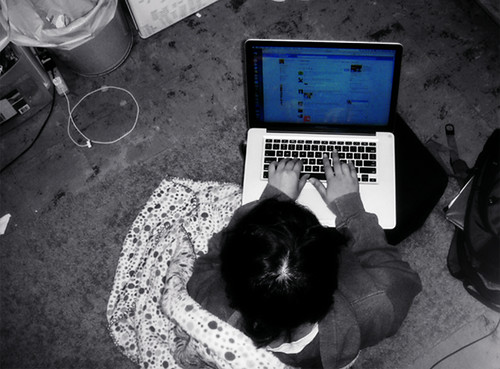
Many college students use Facebook.com daily without being aware of the cyberstalking threat.
i facebook stalk Pictures, Images and Photos

When students put their phone numbers, addresses and other personal information on a social networking site like Facebook, they increase their chances of being a cyberstalking victim, said Michael Kaiser, executive director of the National Cyber Security Alliance.

January was National Stalking Awareness Month and Kaiser said that because people between the ages of 18-24 have the highest victimization rate, due to the popularity of Facebook and MySpace.com, it's important for students to protect themselves against cyberstalking.

"People should be really guarded in sharing personal information," Kaiser said. "I wouldn't suggest that the Internet is a place to write an autobiography."

According to the Pew Internet and American Life Project's January 2009 report about adults and social networking websites, 75 percent of Internet users in the 18-24 age group have a profile on a social networking Web site.

A social networking Web site is a place for people to connect with each other by creating a profile that each individual can customize with pictures, contact information and details about interests, such as music and movies, to reflect that person's personality. Kaiser said an e-mail address is usually the only information needed to become part of a social networking Web site.

Some tips Kaiser had for students were install a firewall, anti-spyware, use the highest privacy settings on social networking web sites and limit the information they put online.

Kaiser advised students that they should "be really careful about who you let into your circle."

Along with the active steps that students can take to protect themselves, Kaiser suggested that students enter their names into a search engine to see if they come across information that they didn't know was there.

"People don't even know sometimes how much information about them there is on the Web," Kaiser said. "People leave trails all over the Internet and stalkers will use those trails."

He said stalkers would use anything from an e-mail address to a phone number, street address or instant message, to stalk a victim.

Nick Penta, a pre-veterinary science freshman, said he thinks an ex-girlfriend stalked him over MySpace. He said she sent him several messages and viewed his profile about 20 times a day to learn about his new girlfriend.

Kaiser said stalking is defined as repeated actions that would cause a reasonable person to feel fear.

Penta added that he wasn't scared of his ex's actions.

According to the U.S. Department of Justice's January 2009 report "Stalking Victimization in the United States," of the 3.4 million Americans who reported being stalked, 25 percent reported being cyberstalked through email or instant messaging.

Stephen Orlando, a pre-business freshman said he experienced the same jealous behavior by an ex, over the Internet.

According to the report, 75 percent of stalking victims were stalked by someone they knew.

"The vast majority of stalking is done by people who know each other," Kaiser said.

Even taking into account Orlando and Penta's experiences with exes over the Web, the two men have not chosen to make their Facebook profiles private and non-viewable to users whom they have not given permission.

Kaiser advised students to "use the highest privacy settings you can on any of the social networking sites."

Amy Cheng, a pre-physiology freshman, said her Facebook profile is private and she doesn't post her personal information on the page.

"I don't put anything on there that I wouldn't show my mom," Cheng said about information on her Facebook profile.

Emily Smith, an undeclared freshman, said that although her profile isn't private, she doesn't put any contact information on her Facebook profile.
Facebook Stalking Pictures, Images and Photos

She added that if she had more of an issue with cyberstalking she might consider changing her profile to private.

Orlando said that he thinks that cyberstalking is more of an issue for women than men.

"There's a lot more creeper stalker people looking for girls than guys," he said.

Penta said that the difference could be attributed to the fact that some women put relatively provocative photos on their individual profiles.

"They're easier targets, just because their pictures might be more revealing," Penta said.

Whatever the reason, the Department of Justice report did concede that women run a much greater risk for being victims of cyberstalking than men.

Whether the victim is a man or woman, the fact that friends and family support the stalking victim is crucial, Kaiser said.

For more information on cyberstalking, Kaiser said that students should visit the National Center for Victims of Crime's Web site, www.ncvc.org or the National Cyber Security Alliance's Web site, www.staysafeonline.org.

Friday, March 16, 2012

Stalking and the Pitfalls of Meeting Online

Stalking is a practice that has been around for a very long time but only recently has become a criminal offence. There are many varieties and reasons for stalking and many ways of meeting a potential partner and engaging in relationship.

The intent of this article is to identify the internet as a means of introduction, not only to a new partner but a potential nightmare when the relationship comes to an end. Because of the anonymity that the internet provides, there is far more potential for deception and misrepresentation than when an introduction occurs naturally face to face. The dangers of forming relationships online have been well documented elsewhere. The focus here will be on stalking behavior resulting from feelings of rejection encountered by one party when the other wants out of a relationship that simply isn't healthy. The internet just happens to provide the perfect environment for a stalker to identify a partner who is less likely to be rejecting because of their own vulnerability.

When an unsuspecting lonely heart logs on to an online dating service, the last thing on their mind is the possibility that they may be inviting a potential stalker (or predator) into their life.

According to the Australian Bureau of Statistics it is mainly women who are exposed to this type of activity and the major research in this area appears to concentrate on the female population. To be classified as stalking, "more than one type of stalking behavior had to occur, or the same type of behavior had to occur on more than one occasion" (Australian Women's Safety Survey 1996, p82.)

Usually curiosity and hopeful anticipation inspires someone looking for companionship and/or love to submit their profile online and spend hours scanning through the many candidates offering themselves as potential partners.

It is very difficult to ascertain from the inviting smiles and "come hither" poses whether or not potential pitfalls are hidden beneath an enticing facade.

Profiles are often very artful works of fiction hiding the truth of a sometimes very disturbed personality.

This may seem a somewhat dramatic claim to some. To others, it is merely a reminder to be very careful next time - if they are willing to brave a next time.

Depending on the severity of the stalking experience, it is possible to suffer long term or permanent consequences in the form of post-traumatic stress disorder.

For an elaboration of the potential psychological impact of stalking behavior on victims please refer to the following paper presented at a conference convened by the Australian Institute of Criminology in Sydney, December 7-8 2000.
*******
The Toll of Stalking:
The Relationship Between Features of Stalking and Psychopathology of Victims.

E Blaauw, FW Winkel -- Department of Clinical Psychology, Vrije Universiteit Amsterdam, The Netherlands
E Arensman -- Department of Clinical & Health Psychology, Leiden University, The Netherlands


It is for the reasons outlined in the paper cited above, that I feel compelled to issue a warning regarding the dangers of online dating to both men and women. Although in the majority of cases stalkers are male, there are women who occasionally fit this profile. The psychological damage sustained by such behavior is similar for both genders, however females are potentially more at risk physically.

Stalking behavior has been around since time immemorial, going back to the caveman's MO of seeking out his victim and then rendering her unconscious with his club. This was handy as the method produced few objections!

Then of course there are the modern day dangers of leaving a disco or bar alone and having to face a range of intrusions from following to other more vicious crimes of assault, rape, or in extreme cases, murder.

The Australian Institute of Criminology, provides information on stalking trends in Queensland, Victoria and South Australia. Stalking behavior is classified according to the relationship of the stalker to the victim and whether or not mental illness is present.

The focus of this article is on stalking behavior within the context of an existing relationship or after it's demise. An insidious form of stalking occurs when the victim is enticed into a relationship which they later wish to leave. The stalker is usually emotionally disturbed and may suffer from a personality disorder. Fear of rejection is often present and the discomfort and insecurity of this affliction could lead to bizarre behavior patterns.

Signs to watch for include impatience or anxiety when:

* phone calls (or emails/ instant messages) are not returned quickly enough
* they don't know where you are or you are late
* a gift or favor is not acknowledged immediately
* attention is given to your other friends
* they are not the centre of attention
* attending a crowded social function
* they feel left out or not included

While relationships of this nature can begin after meeting at all the usual places, including a trusted friend's introduction, online dating presents a different problem.

A computer screen affords the perfect hiding place for a person plagued with emotional insecurities. They are able to surf the net in the comfort of knowing they are anonymous. Often they are hidden while they wait for someone else to initiate contact. Profiles of potential partners are carefully scrutinized and usually someone who gives the impression of a caring and nurturing nature is the chosen one. They are also chosen due to vulnerability due to disappointments in other relationships and loneliness. The perfect choice.

The stalker personality type can present as highly intelligent and very charming. They can be very alluring, persuasive and appear to be very interested in you once you have shown enough interest to gain their trust. Their attention appears to be fully focused on you. The attention feels wonderful and you are told you are very special in their life. Before you know it, you are in a relationship even though you may not be too sure if you actually want to be there!

Your every word is taken in and stored in their memory. They listen attentively to what it is you are seeking in a partner because they want to deliver the goods that will keep you glued to their side. Before long, talk of long-term commitment is setting off alarm bells in your head and even the big M may have already been mentioned. Have you been going out together for 6 months to 1 year yet? Probably not!

Whatever it is you want in a partner however, they assure will be provided! Problems only start when you begin to feel that contact with this person is becoming very "sticky". It feels draining to be with them rather than energizing. With time you may even dread spending prolonged time together. Thoughts of extricating yourself from this relationship occupy your mind and you may try to initiate separation.

This is easier said than done. When you are no longer the compliant, loving and nurturing partner, what does that make you! Public enemy number one, of course!

Loving words are now exchanged for abusive character assassinations coming at you from unwanted phone calls, SMS, instant messages and emails. (a smear campaign to everyone around them and around you) Whatever may have been revealed of your own insecurities often come hurtling back at you in an attempt to break down your resolve for freedom. They may even show up on your doorstep or place of work wanting an explanation for what they have done wrong.

This is usually followed with apologies and self-blame and expressions of desire to make things right again. The anxiety is rising and their fear of rejection escalates.

Their behavior will depend on what you do at this point. If you succumb, meet and make up, then their anxiety will be appeased and you are off the hook for the time being. If however, you refuse to engage in conversation and reconciliation, it could get nasty. How nasty it gets depends on how it is handled and the severity of the stalker's affliction.

In any event, it is imperative that you realize that you are not dealing with a rational person and so any attempt to disengage from relationship with rational conversation will not work. This person needs help and this is not your responsibility. Usually psychological help is appropriate. Sometimes however, a psychiatrist will need to make an assessment and perhaps prescribe medication.

Your responsibility is to look after yourself and take all the precautions necessary for your safety. If you have had at least two instances of stalking behavior it is important to lodge a complaint at your local police station. They will then advise whether taking out an AVO (Apprehended Violence Order) (in the U.S. an RO - Restraining Order) is appropriate. Stalking is now an illegal offence in NSW (Australia) and includes the following behaviors:

* Following by any means, car or on foot
* Lurking in the vicinity of your home or office
* Sending unwanted mail, cards or gifts
* Sending unwanted emails, SMS
* Unwanted phone calls
* Spreading malicious gossip about you to your friends, acquaintances or work colleagues, etc
* Damaging or interfering with your property or vehicle (including leaving notes on the windscreen)
* Giving, sending or leaving offensive material

It is also important to alert trusted friends, neighbours, work colleagues and anyone else who may be able to offer support. Support is needed not only for your physical safety, but your psychological safety as well. Being followed and being subjected to the invasion of privacy that constitutes stalking behavior can leave long-term scars. Seek the help of a suitably qualified therapist if you feel traumatized by your experience. This will help in preventing any long term damage and provide helpful coping strategies.

Keeping your home secure and being careful in car parks is important. If necessary, change your telephone number or use an answering service to screen your calls. Block unwanted emails and be aware of your surroundings when away from your home or office. Initially it may help to stay with friends or go away on holiday where you are removed from your known routines.

It is imperative that the stalker is given absolutely NO ATTENTION from you. Even negative attention is food for the stalker's hunger and will only prolong the situation. Do not answer their phone calls, emails, SMS, instant messages (Block what you can) or satisfy any attempt of contact by any means. Ultimately they will lose interest and seek satisfaction from another source. Have an authority figure such as a police officer or lawyer contact the stalker to make it very clear that their conduct is illegal and must stop immediately.

Just be careful and remember the warning signs listed above. If it feels better when you are alone than when you are with your newly acquired partner, have a real good ponder on whether your own fears of being alone are justification for staying in a relationship that just doesn't feel right.

CLICK HERE FOR ORIGINAL

Friday, March 9, 2012

Case Highlights 'Spoofing' and Other Electronic Stalking

By Nathan Gorenstein

The e-mailed threat was stark. "How would you like it if your sister went missing?" The next message was an insult. "Whore," the writer said, and taunted, "You called the cops but they can't do anything."

Todd Hart, 26, had reason to believe his boast was accurate.

The victim, an ex-girlfriend he threatened for weeks last June, had called police about earlier disturbing e-mails. They immediately asked for copies.

Problem was, the e-mails had all disappeared. Twenty minutes after the woman opened each electronic message, it somehow automatically deleted itself from her computer's in-box.

So a police officer sat down at the woman's computer to see the next threat himself.

By July, the FBI was knocking at the door of Hart, a former SEPTA employee now being held in jail. On Monday, he will be sentenced in U.S. District Court for a string of electronic attacks on the woman, her friends, and her family. He pleaded guilty in November.

"For about a month, when all the harassment was going on, I would sit in my room and pray to God that it would stop," the 24-year-old woman, who lives in California, wrote in a victim's statement. Her name is redacted from sentencing documents.

In the course of a few hours one evening last year, prosecutors believe, Hart dispatched a sewer repairman, a pizza deliverer, and an electrician to her father's house.

After a short relationship - initiated on an online dating site - Hart reacted with fury when the woman announced she was moving from Philadelphia to take an internship at Lawrence Livermore National Laboratories in California.

First, he threatened suicide. Then came the stalking.

The self-deleting e-mails were an unusual touch: Even the experienced federal prosecutor in Philadelphia had not encountered it before.

Hart also used a second tactic, called "spoofing," to make harassing calls that recipients could not trace to his telephone number.

Using "SpoofCard.com," one of many Internet services that permit callers to hide their phone number and even change the sound of their voice, Hart made calls warning the woman that she had 10 days to leave California "or else." In another call, he said, "You're going to [obscenity] die."

Thanks to modern electronics, that wasn't all.

Using passwords obtained while they lived together, Hart canceled a doctor's appointment, changed the passwords on the woman's e-mail and Facebook accounts, took control of her bank accounts, and deleted her application to take the Medical College Admission Test.

Assistant U.S. Attorney Michael Levy is asking for a sentence of at least 57 months, a year above the federal guidelines. "To say that this defendant has serious emotional problems when it comes to dealing with women is an understatement," he has told the judge.

He also offers some advice: Completely revise a password whenever you believe it is compromised. And be careful with whom you share a password.

Hart's attorney, federal public defender Mark T. Wilson, did not return messages seeking comment.

Hart pleaded guilty to stalking and unauthorized use of a computer. Such crimes are usually prosecuted in state court, but he is facing a federal judge because the victim worked at a federal institution, Livermore, whose internal police force the woman had initially contacted.

Among other scientific work, Lawrence Livermore is the nation's top nuclear-weapons research lab, though the woman, a biology and premed major, was not employed in that research.

Hart has previous convictions for forgery, and in 2003 he was convicted in Burlington County "for almost identical" stalking charges, Levy said. In 2005, he was convicted for sneaking into a women's bathroom at Immaculata College and videotaping students as they used the toilet. He initially received probation, but within 18 months he was in violation and served time in jail, according to court documents. He is in Chester County Jail for again violating his probation.

When FBI agents searched his Philadelphia apartment, they discovered a telescopelike object called a "peephole reverser."

"The agents tested it and determined that it enabled a viewer to look into an apartment through the peephole," according to court documents.

"The Federal Bureau of Prisons does have counseling programs," Levy said in an interview, "and he clearly needs counseling. I don't know if he would be cured."

Levy, who has wide experience handling computer crime, said it was the first case he had handled involving self-deleting e-mails.

No one from the mail service Hart used, BigString in Red Bank, N.J., returned calls or messages seeking comment.

The company is in financial trouble, according to corporate records, but at least a half-dozen other firms offer such services, according to their websites. Various technology is used. BigString promises that once the recipient clicks on the message sent through its servers, the mail will "self-destruct" within a specified time period.

On its website, the firm adds, "The mail, while looking like every other mail, will print nothing when the receiver clicks print on the computer and show nothing if the receiver tries to save the text or image."

The second technique Hart used is more common. Spoofing has been controversial enough that Congress last year made it illegal to hide the origin of a telephone call "unless a legitimate business reason exists," according to pending Federal Communications Commission regulations.

Meir Cohen, president of SpoofCard.com, said that despite the firm's name, its intent is to provide legitimate services. As an example, he cited an on-call physician who may use a personal cell phone to contact a patient but wants return calls to go to his office or answering service first. The doctor can have one of those numbers appear on the patient's telephone instead.

"The vast majority of our customers use it as a tool to protect their privacy," Cohen said. "A large portion of customers are really women who want to protect their privacy and don't want [stalkers] to have their numbers."

Cohen, who was familiar with the Hart case, said, "My heart goes out to the victim."

SpoofCard.com cooperates with law enforcement, he said, and "we will hand over records if we are subpoenaed."

Tuesday, February 21, 2012

Doctor of Economics Sentenced for Cyber-Stalking, Extorting Ex-wife


By Nicholas Phillips

(Missouri, USA) ​Jovica Petrovic, a 62-year-old native of Croatia, was sentenced today to 97 months in prison for cyber-stalking and extorting his former American wife.

Last November, a jury found him guilty upon learning of the bizarre events that transpired after the couple's divorce: Petrovic posted on a website some images of them having sex (which he'd secretly recorded). He also added personal information about the woman's past and her children.

In addition, the jury learned how Petrovic printed that web address on about 150 postcards and mailed them to her colleagues, friends, family -- even the local Walgreens. He told her he'd take down the site if she gave him furniture, her wedding ring and $100k.

"I was out of my mind," Petrovic told the court today in a long, meandering statement delivered with a heavy German accent (he was born in Croatia but grew up in Germany; he also has a doctorate in economics).

His attorney, Steve Stenger, added that the government had "overreached" in a private dispute, and sought to "demonize" his client.

Assistant U.S. attorney John Sauer, however, countered that Petrovic "made himself into a demon" by committing acts that were "vile, appalling and disgusting." The defendant's deeds were coldy calculated in advance, Sauer added, to destroy his ex-wife and inflict as much personal pain and humiliation as possible.

In the end, it came down to the opinion of U.S. district court judge Henry Autrey.

"We can do so many things with the Internet," Autrey said drily. "Nobody can see us as we slink and stalk and covet. It's fun. The Internet is a beautiful thing."

But Petrovic was trying to diminish his responsibility, the judge observed, by suggesting that his ex-wife was complicit in his crimes. Autrey -- like the jury -- found such a version of events "inconceivable."

The government had asked for a sentence above the guideline range for a total of 87 months. Judge Autrey went above and beyond that, sending Petrovic away for 96 months.

Petrovic said he would appeal.


Saturday, February 4, 2012

Cyberstalker: "You Ruined Her Life"


By Claire Ellicott

An obsessed television producer who stalked his ex-classmate for nearly a decade was jailed yesterday after he sent her an anniversary card marking the sixth year of her restraining order against him.

Sentencing Elliot Fogel, 37, to two years in prison, Judge Ian Darling branded his behaviour ‘sinister and deeply concerning’ and said he was jailing him for the good of the public.

The former Sky Sports news producer Googled Claire Waxman’s name 40,000 times in a year, posed as a prospective parent at her child’s nursery, broke into her car and made hundreds of late-night phone calls to her.

As a result of his nine-year campaign of harassment, Mrs Waxman, 36, a therapist, claims she suffered a miscarriage, developed an eating disorder and had been forced to move home five times. It is the third time Fogel, who the prosecution described as the ‘stalker who will not stop stalking’, has breached his restraining order and the second time he has been jailed to protect the mother-of-two.

In the latest breach, on February 1, 2011, Fogel drove along a road in Willesden, north-west London, where Mrs Waxman regularly parked and slowed down before giving her a ‘sinister’ grin.

Shortly before, he had been called a ‘vexatious’ litigant after bringing a civil case against her which alleged that she had created a hate campaign against him on Facebook. The case was dismissed and Mrs Waxman is suing the Crown Prosecution Service for £5,000 because it failed to prosecute Fogel for bringing legal action against her because it said it would have breached his human rights.

Although Fogel claimed he was using the route as a short cut home from the hearing, the judge said: ‘I’m satisfied that you drove slowly and sinisterly up behind her and when she looked you smiled at her before driving off.’

Judge Darling said Fogel’s ‘compulsive and enduring obsession’ meant that he posed a high risk to the public and there was no option but to give him a custodial sentence.

He told him: ‘You have plagued her life for many years and you have literally ruined it. You have mentally terrorised her over many, many years and her life will never and can never be the same.

‘Your actions have not just affected her, they have also impacted on her family, her children, her wider family and her friends, so widespread and calculating you have been.’

The Inner London Crown Court heard that Fogel allegedly posted a card to Mrs Waxman on January 16 – the sixth anniversary of his restraining order – while he was on bail awaiting sentence for his third breach. Although the card was unsigned, she said the ‘tenor’ and timing convinced her it was from him.

Fogel, of Edgware, north-west London, first developed an unhealthy obsession with Mrs Waxman when the pair were A-level students together at a college in St Albans, Hertfordshire. She demanded he leave her alone and she heard nothing more until she received a dinner invitation from him ten years later in 2003, which she declined.

Later that year, he was seen jogging on the spot outside her home and he began spending more time around her workplace. After his arrest, a police search of his computer revealed he had her wedding photographs as a screensaver and a Google Earth aerial map of her home. It also emerged that he had posed as a prospective parent at the nursery her daughter attended and had also paid for background searches to be carried out on both her husband, Marc, 35, who works in marketing, and her father.

In 2006, Mrs Waxman obtained a restraining order banning him from going near her home, her work or her parents’ address, which he repeatedly breached, even after being jailed for 16 weeks last year.

Yesterday Fogel showed no emotion as he was jailed.

Tuesday, January 31, 2012

Charged with Online Harassment


(U.S.A.) Bridgeport man once again faces charges for stalking a woman in Fairfield, and this time police said he used a fake name and Facebook and Twitter accounts, police said.

Dawer Gilani, 32, of Atlantic Street, was taken into custody by Fairfield police Monday at his home and charged with 10 counts of violation of a protective order and violation of his conditions of release. He was held on a $250,000 bond and was scheduled to appear Tuesday in Bridgeport Superior Court.

Gilani was stalking the same woman he was charged with harassing previously, police said. She contacted police on Jan. 12 to report that Gilani was using the name Ali Umar and sending her friend requests on Facebook. While he apparently used a different name, he did not use a different photograph and the woman was able to identify him as Gilani. He also set up a Twitter account using that name, but police said the only person he was following on Twitter was the victim.

Police seized evidence from Gilani's car and home during the arrest.

Sgt. Suzanne Lussier said Gilani began stalking the victim at her place of employment last January when he was initially warned to stay away. The next month, he went to her office, and asked to speak with her, telling her co-workers that he knew her from the Planet Fitness gym in Trumbull. He was told to leave. In March, the victim found a note on her car, telling her not to call police. Afraid for her safety, she reported the incident to police.

In April, Gilani came to police headquarters asking if there was a legal way to contact the woman. Again, he was warned to refrain from contacting her in any way, and the woman was advised by police to obtain a restraining order.

Police spotted Gilani in May circling the parking lot of the Fairfield building where the woman works, and police said he admitted he was trying to find her car. Gilani was charged with stalking and criminal trespass in May and again in August. In June, Trumbull police also charged Gilani for repeatedly driving by the victim's home, while Bridgeport police have reportedly investigated five documented incidents involving Gilani stalking another woman in that city, police said.

According to court records, Gilani pleaded not guilty in August to threatening, harassment and disorderly conduct charges stemming from the Fairfield arrest and the case is awaiting disposition. He also pleaded not guilty to the Trumbull charges of stalking, breach of peace and violating conditions of release, and court records indicate that case is awaiting disposition. A third court case is blocked from the public with the notation that it is "statutorily sealed."


Wednesday, December 21, 2011

Twitter Stalking is Protected Free Speech


by Andrew Couts

(San Francisco, U.S.A.) Saying mean, terrible, even violent things about someone on Twitter or blogs is free speech protected by the First Amendment, a judge has ruled.

A San Francisco judge has declared that cyberstalking on Twitter and blogs is constitutionally-protected free speech, reports The New York Times. The ruling is a victory for the First Amendment. But like all things worth fighting for, it comes at a price.

Here’s what happened: A Buddhist religious leader in Maryland named Alyce Zeoli became friends with a man named William Lawrence Cassidy. At some point, the two had a falling out. Cassidy took the mature route, and began posting thousands of messages on blogs and Twitter, often using pseudonyms, that aggressively disparaged Zeoli. Some of them even called for her death.

Understandably distraught, Zeoli then worked with the FBI to have Cassidy arrested, which he was, based on interstate stalking laws. Cassidy, the government argued, had caused Zeoli “substantial emotional distress.”

This, however, was not enough to convince Judge Roger W. Titus, who declared that Cassidy’s actions, while distasteful, were not enough to set a precedent that could cause serious harm to the entire foundations of speech on the Internet.

“[W]hile Mr. Cassidy’s speech may have inflicted substantial emotional distress, the government’s indictment here is directed squarely at protected speech: anonymous, uncomfortable Internet speech addressing religious matters,” wrote Judge Titus, in his official order.

Titus ruled that, because no one was forced to read Cassidy’s posts and tweets — as opposed to a “telephone call, letter or email specifically addressed to and directed at another person” — they are considered free speech, not harassment, just as personal bulletin boards of the colonial era fell under the protection of the First Amendment, which “protects speech even when the subject or the manner of expression is uncomfortable and challenges conventional religious beliefs, political attitudes or standards of good taste.”

One of Zeoli’s lawyers, Shanlon Wu, told the Times that Zeoli was “appalled and frightened by the judge’s ruling.” It is not yet clear whether there will be an appeal to the ruling.

Friday, November 11, 2011

130 Difference Facebook Profiles?


(U.S.A.) ...this is one situation that takes the cake in “crazy ex” stories. Reported today is the prosecution of 22 year old Los Angeles resident, Jesus Felix, who created — wait for it — 130 different Facebook pages in order to harass his 16 year old ex-girlfriend. Wow.

On facing two counts of California’s new Internet impersonation law — in effect January 1st – and one count of making harassing telephone calls, Felix has pleaded “No contest”. In fact, he has only narrowly dodged a one-year jail time sentence by agreeing to take anger management and sex therapy classes, two things that are clearly in his best interest. He is also now saddled with a five year probation, along with 30 days of road crew service.

Prosecutors say in a news release that Felix created Facebook pages and Craigslist listings using photos of his ex-girlfriend. The girl’s mother discovered online profiles with her daughter’s contact information as well as sexually explicit photos.

original article found here

Tuesday, November 8, 2011

Could You Be a Stalker's Next Victim?

By Claire O'Boyle

(U.K.) Following a shocking report into the problem of stalking, we look at how police deal with the crime and how in one woman's case, they ended years of abuse from a stranger.

stalker Pictures, Images and Photos

It's a crime that usually hits the headlines when it's linked to A-list celebs, but falling prey to a stalker is something that never crosses most of our minds.

But recent figures show it's on the rise, with a shocking 1 million British women and 900,000 men being targeted by predatory stalkers.

The biggest problem in tackling the crime, according to experts, is that stalking is simply not taken seriously enough in the UK.

Jane Harvey from the Network for Surviving Stalking (NSS) says: "Victims of stalking often try to shrug it off until it is too late, but the main problem is that the authorities don't take it seriously."

A report carried out for NSS found 77% of victims waited until they were targeted 100 times before going to the authorities.
"That's much too long," says Jane. "It's amazing what levels of abuse people will put up with - they don't identify the abuse as stalking.

"They tell themselves that if they ignore it, things will fizzle out. But if something happens or you are contacted repeatedly in a way that causes you alarm or distress, that is stalking."

Jane says around 50% of all cases are carried out by ex-partners, but in the other half of cases, victims have never had particularly close relationships with their stalkers - and many have never even met

them. "It can often be someone known through work, or a friend of a friend," explains Jane. "In other cases it could be someone you pass in the street.

"And with the internet as huge as it is, sometimes people never set eyes on their stalker."

Jane says one of the main problems is that so many of us are brought up to be polite and kind, and rather than rebuff unwanted attention, we often let it go.

"It means sometimes we find ourselves in slightly awkward situations and don't make it clear that we're unhappy," says Jane.

"For example, with repeated text messages from someone we don't know well, we might reply politely to one or two.

"Then after that we might ignore them, when perhaps the best, although not necessarily the easiest, thing to do is say you do not want any more texts." The latest figures relating to the number of victims in the UK are terrifying.

"Victims must get the help they need," says Jane. "Until you speak to someone who has been stalked, you never fully understand how terrifying it is.

"One man I've talked to is being stalked online. The stalker seems determined to wreck his life - he spreads lies about him on forums and chat sites.

"It's extremely distressing, this man is being used as a plaything for the stalker's amusement."

According to the law, if any unwanted or abusive acts happen on two occasions, you can go to the authorities.

Despite this guidance, the police came under fire in light of the report, and one senior officer even said forces have let victims down.

However, according to Jane, the police can be fantastic in some areas, while other victims are left floundering on their own. "It sounds like a cliche, but this is another postcode lottery," she says. "But at least now, the issue is on the agenda, and the good work done by some forces can roll-out across the UK."

One victim who had a positive experience with the police was mum-of-two Alexis Bowater, whose dangerous stalker Alexander Reeve was jailed for four years last April.

"I knew from the very first email this guy wasn't right," recalls Alexis, 39.

"I was working as a news anchor on a local TV station, ITV Westcountry, and these horrible emails came in. Some were so graphic and frightening I don't want to repeat what they said. I told my boss about the first one, and we told the police almost immediately."

The menacing messages, threatening rape and violence, chipped away steadily, telling a pregnant and petrified Alexis, "I'm watching you," and, "I know where you live".

"He was clever in the way he wrote the emails," says Alexis. "You couldn't tell if he really knew anything or if he was actually watching me. Not knowing was the most frightening part."

To the news presenter's relief, the messages slowed down when she went on maternity leave to have her first child.

But when she came back and went on screen, visibly pregnant for a second time, the emails resumed and were more menacing this time.

"It was worse with my second pregnancy," she recalls. "He sent obscene, horrible messages about me, and he was threatening my unborn baby. He said he hoped my baby would die."

Alexis became increasingly anxious throughout her pregnancy as fears about her stalker's intentions grew.

"I sometimes did late shifts at work and would have to drive myself home at 11pm," she says. "I remember taking detours because I thought someone was following me.

"I noticed someone tailgating me a couple of times, but I'll never know if it was him.

"People talk about this state of hyper vigilance you get into when you're being stalked, and I'm sure I was there.

"One night when I was pregnant again, my first baby woke me in the night. My husband was away for work and I went into the baby's room to comfort him. I heard a creaking on the stairs and thought: 'It's fine, I'll just get my mobile and call for help'. But my phone was in my bedroom. I'd have to pass the stairs to get it. I decided I'd crawl through a window to escape."

Luckily, Alexis didn't need to flee. There was no one in her home that night.

But police took her fears seriously and installed an alarm at the news presenter's home.

In many cases of online stalking, tracking the culprit is an enormous task. But in Alexis's case the police found a clue at an internet cafe in Chichester, West Sussex.

Unfortunately, they couldn't trace him any further, and he stopped sending emails.

Then in May last year the messages started again and officers took eight weeks to snare him. "In those weeks towards the end, I was frantic," she says. "I knew the police were closing in on him, but would it make him more angry?"

In April, after two years of harassment and threats, 25-year old Reeve was jailed and given a lifetime restraining order.

"Putting a face to it all should have meant more, but he was just a sad man. He meant nothing to me," explains Alexis.

She says the police helped her cope with the ordeal. "They were very supportive. But it's a pity if it's not that way across the country because it's a scary thing to go through. The police did a good job in my case, so hopefully other forces can follow their example."

For support and information about stalking in the U.K., visit http://nss.org.uk.

Stalking

What you need to know -

  • 18% of stalking victims have been sexually assaulted
  • 12% say the stalker threatened to harm their children
  • 15% say their pets have been abused by the stalker
  • 67% of victims were spied on by their stalker
  • 40% of stalkers got details from the victim's friends
  • 27% got information from the victim's workplace or family
  • 77% of victims didn't go to the police until they'd been bothered 100 times

What to do if you're stalked -
  1. Show no emotion, regardless of how scared or angry you are. Never confront or agree to meet your stalker.
  2. Call local police to find out which officer is running the case.
  3. Tell your friends, family, neighbours and work colleagues.
  4. Keep evidence like texts, emails, letters and parcels. Record anything that could be proof and keep a diary.
  5. If you get calls from a stalker, in the U.K. use 1471 to track their number.
  6. If you're being followed, try to stay calm. If you're driving, head for the nearest police station to get help.
  7. If you ever feel in imminent danger, call 999. (or 911 in the U.S.)

Friday, November 4, 2011

Cyberstalking by Exes - It's Illegal


by Jann Blackstone-Ford & Sharyl Jupe

(Florida, U.S.A.) Question: I'm going through a divorce. Yesterday I found out my soon-to-be ex hacked my email account and changed all my passwords so he could read my private business. Then he changed them back, thinking I wouldn't know — but they send an alert and my email comes through my phone, so I knew what he was doing. He thinks I had an affair because he still can't believe I would leave him just because he's a jerk, so he's looking for some justification I was fooling around. I know you are going to say it's bad ex-etiquette, but what can I do about it?

Answer: It's not only bad ex-etiquette, but it also could be regarded as cyberstalking, and that's illegal. Hacking an ex's email is not new, but unless the victim feels he or she is danger, rarely does that person press charges. It really depends if this is an obsessed ex and your life is in danger or merely someone feeling particularly desperate one day and making bad choices. Hopefully, from your history with this guy, you know which it is. If it's an act of desperation, talking to him will probably do the trick, but make your boundaries clear.

After a breakup, people often continue to sleep together for various reasons and this sends mixed messages — especially if one of the parties wants to stay together. If you are doing this, or anything else like it, you may be contributing to the confusion. Make sure you're not doing anything that will keep your ex hanging on. That said, if your ex has acted irrationally in the past and you are frightened, consider going to the police. The police take cyberstalking very seriously and many have departments devoted specifically to problems with Internet and social-media interaction.

Unfortunately, it's common practice to share passwords — even PIN numbers — with your partner, but this can present a problem after a breakup. It gives them easy access to your personal life and even your money, so best practice is to change all passwords and PIN numbers as soon as you realize the breakup is final. You may even want to change the email accounts linked to your Facebook or other social-media accounts, so there is no way he can hack into your private business.

It goes without saying that your ex is breaking just about every rule of good ex-etiquette, but that doesn't mean that you have to break the rules when dealing with him. Being honest (Ex-Etiquette Rule No. 8) is always a good one to rely on, as well as rules No. 5 and 6, don't be spiteful and don't hold grudges. Finally, one rule your ex definitely forgot, Rule No. 9, is "respect each other's turf." Respect is critical to any successful relationship — even when breaking up.

original article found here


NOTE: CONTRARY TO WHAT THESE AUTHORS SAY - MANY POLICE DEPARTMENTS DO NOT, UNFORTUNATELY, TAKE CYBERSTALKING SERIOUSLY. - EOPC

Popular Posts

Blog Archive